

Behind the Scenes of Honda RTL ELECTRIC Development: EV Trial Bike Takes On the World (Part 1)
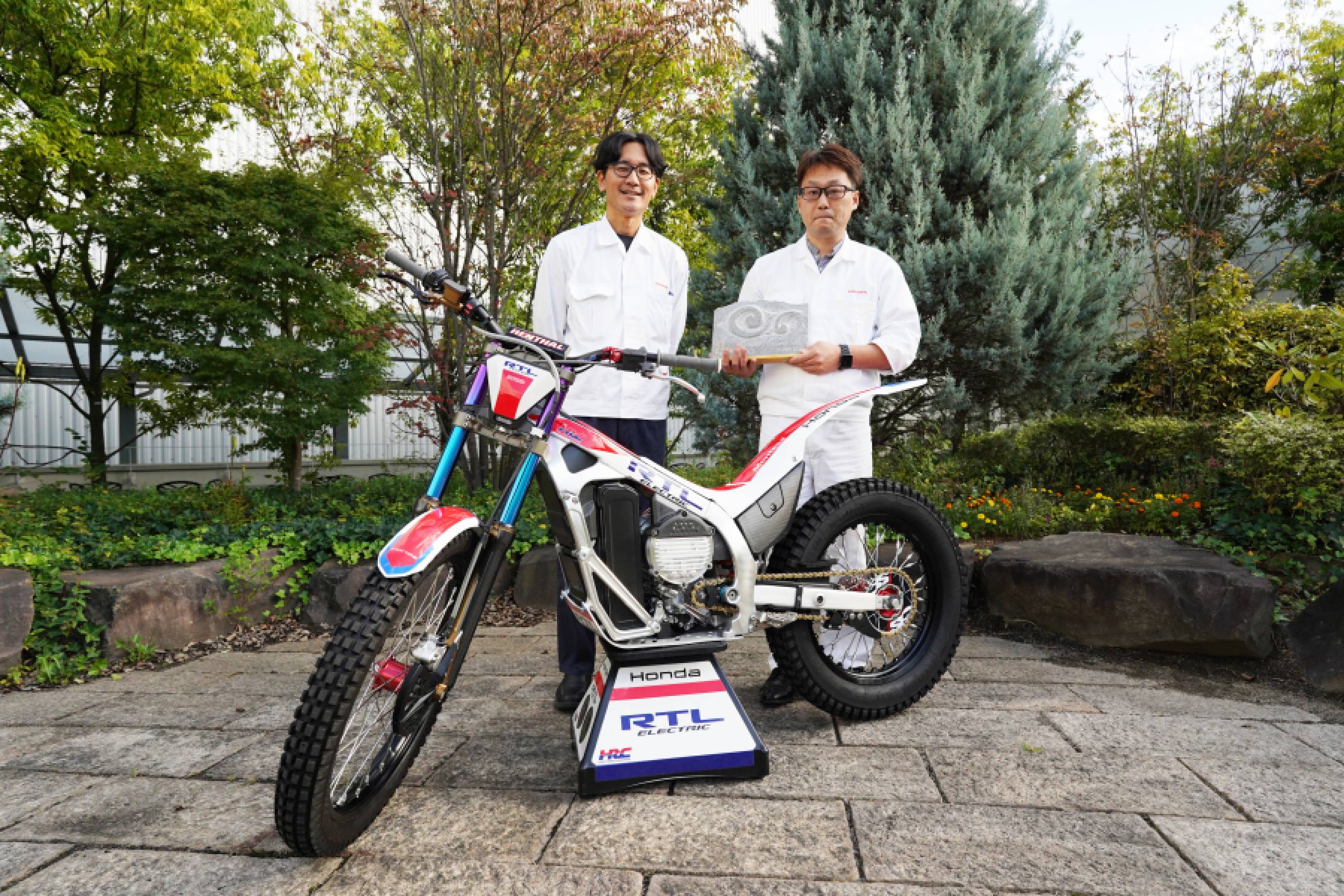
As its name suggests, the Honda RTL ELECTRIC is the electric vehicle (EV) version of Honda’s legendary RTL series of competition trial bikes. In 2024, the Honda RTL ELECTRIC competed in three rounds of the All Japan Trial Championship (JTR) as a real-world test. This year, 2025, the RTL ELECTRIC competed in all rounds of the Trial2 class in the Trial World Championship (TrialGP).
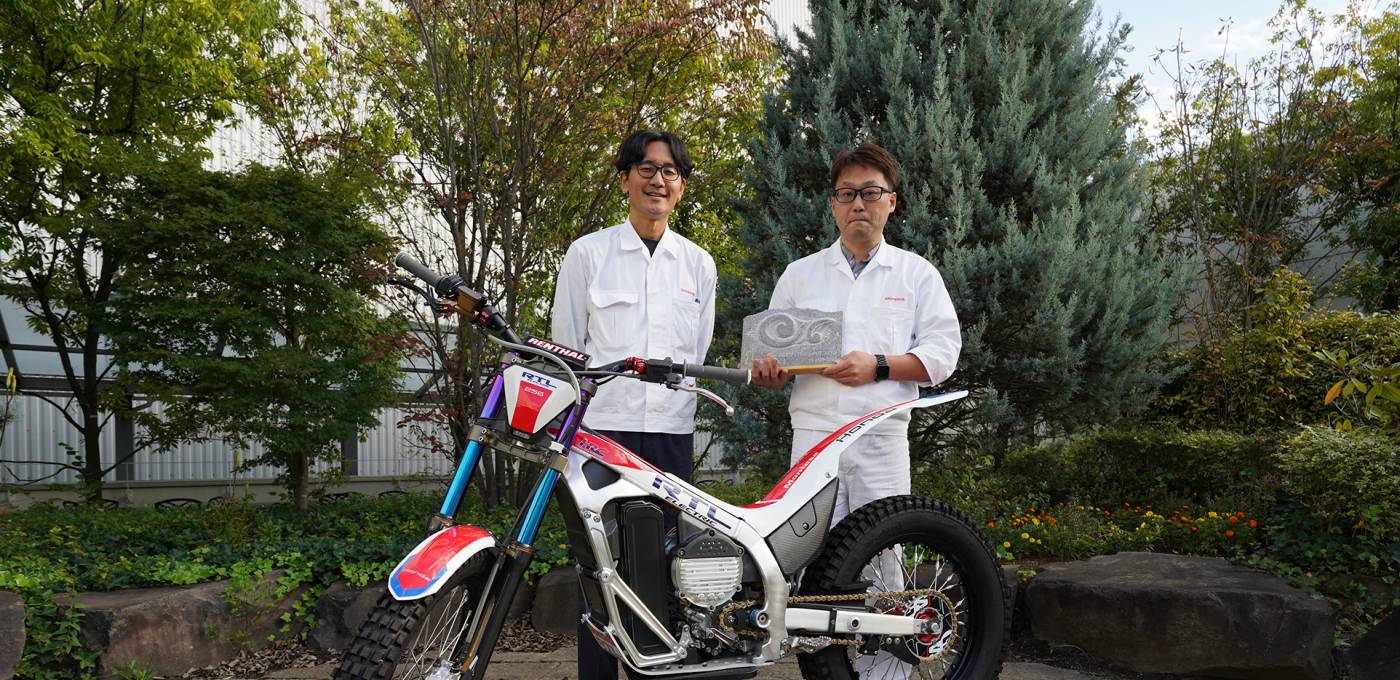
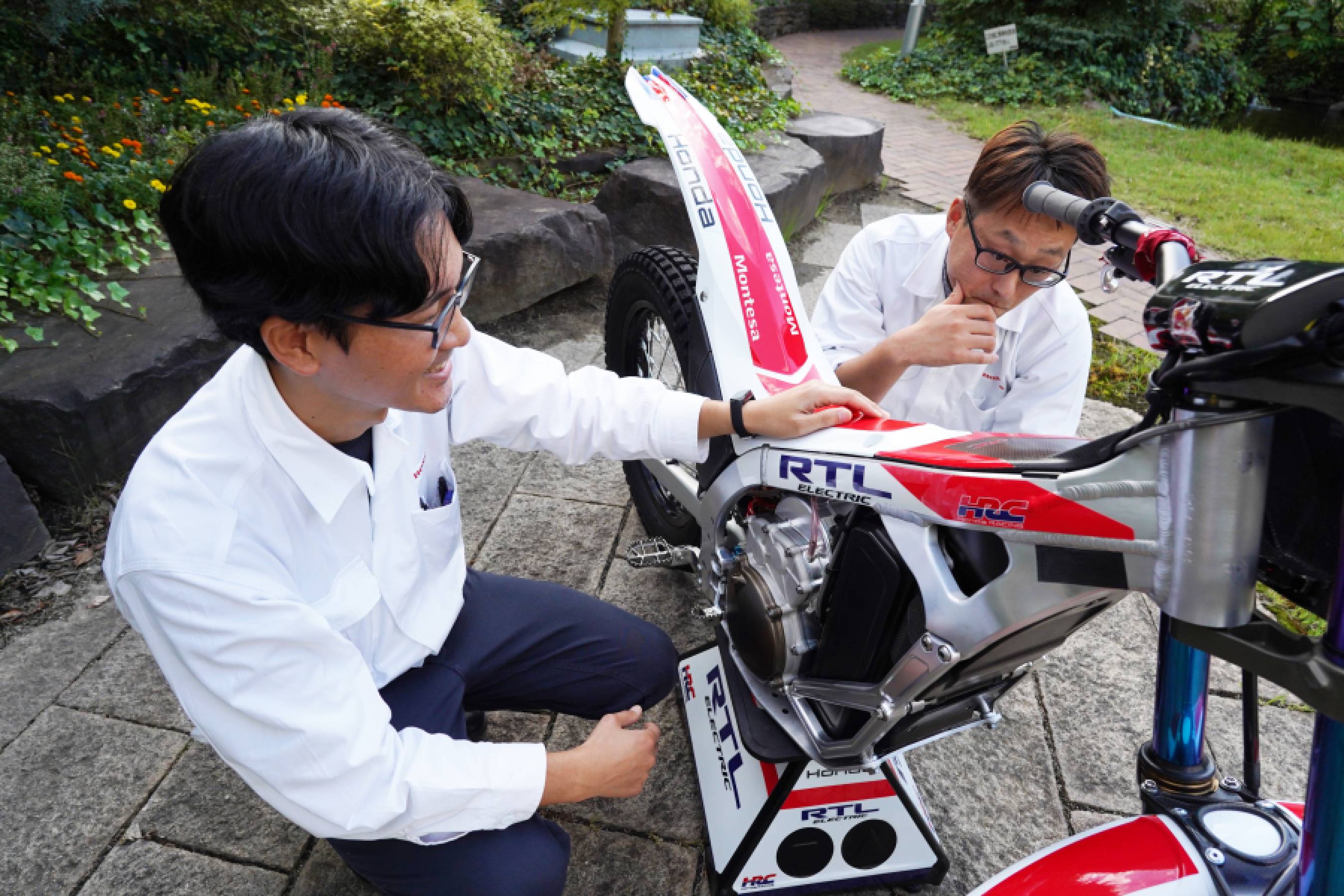
Hiroyuki Akiyoshi and Yusuke Fukao from Honda’s Electrification Development Division, Motorcycle and Power Products Eletrification Business Unit shared their stories of the RTL ELECTRIC’s development. Both have supported the project since 2024, when Takahisa Fujinami achieved three consecutive JTR victories riding the RTL ELECTRIC.
Many people are involved in this electric bike and project, including motor specialists, component suppliers, and people overseeing the entire operation. However, among the development staff, only Akiyoshi, Fukao and a few others were deployed trackside.
Akiyoshi was responsible for the package – combining various components such as the battery and motor – and participated in the 2025 Japanese TrialGP. Meanwhile, Fukao worked closer to the riders, translating their requests and feedback into changes in the bike. He accompanied the team to every race during this season.
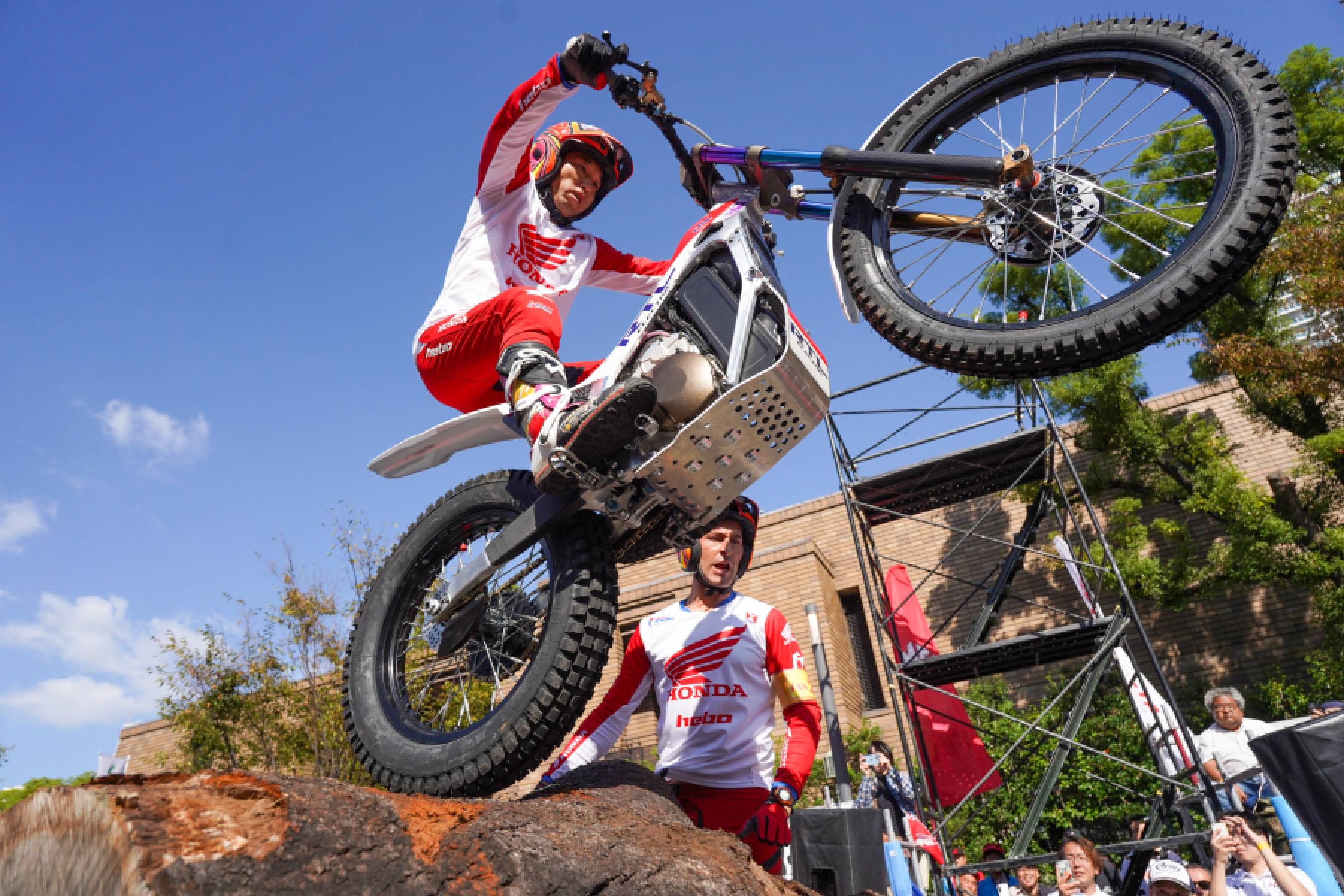
Honda RTL ELECTRIC made its competitive debut in JTR in 2024. The rider was Fujinami, the 2004 TrialGP World Champion and also the team manager for Repsol Honda HRC. Although it was a spot entry in the final three races of the season in the International A-Class Super (IAS), Japan’s highest class, when combined with Fujinami’s riding the RTL ELECTRIC achieved the remarkable feat of winning all races.
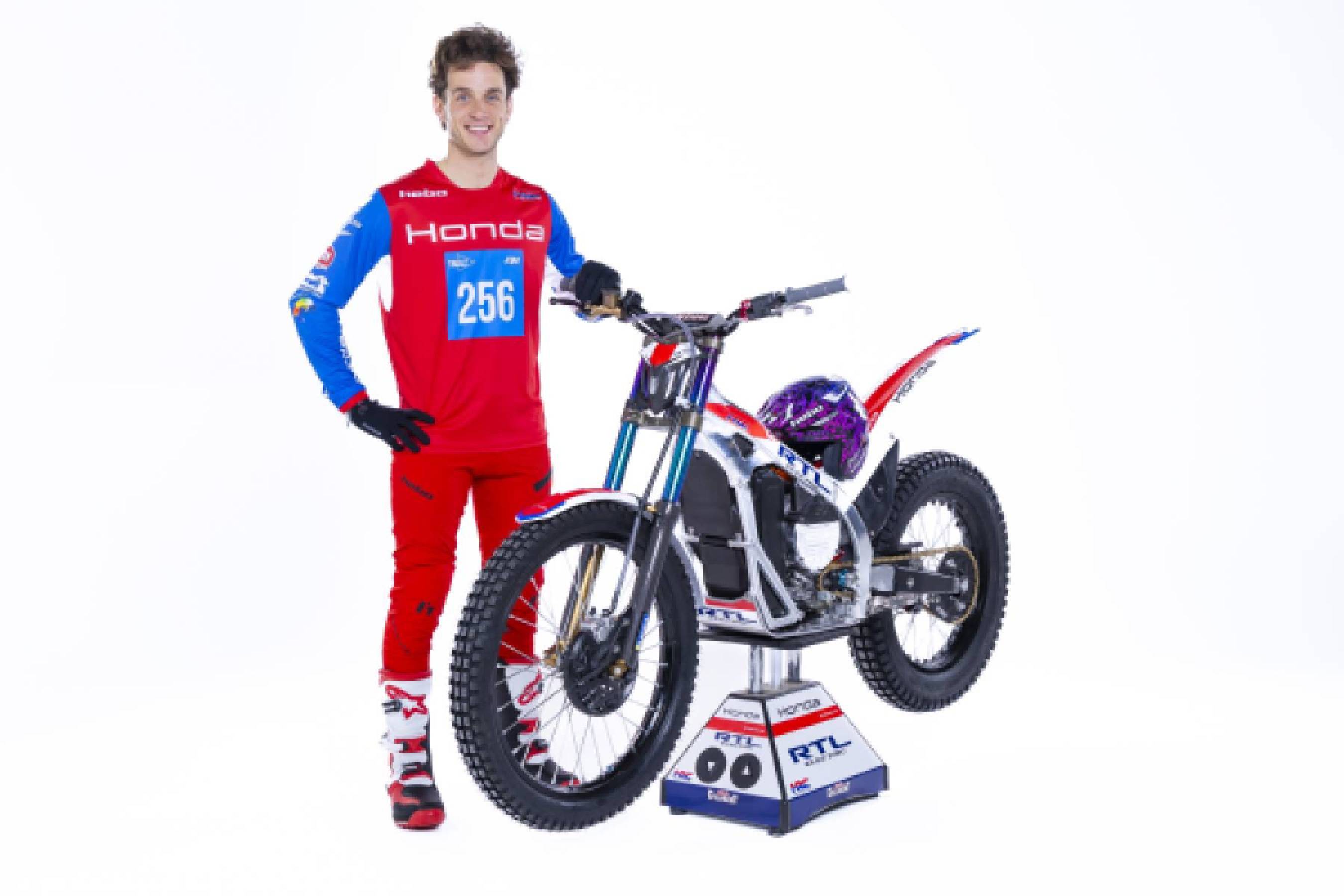
In 2025, the stage shifted to the TrialGP Trial2 class. The rider was Miquel Gelabert, a Spaniard born in 1998. He is a proven performer with two third-place podium finishes in TrialGP.
The trial bike used for the 2025 season was essentially an updated version of the RTL ELECTRIC that achieved three consecutive JTR wins the previous year. Given its track record in JTR, with three consecutive wins in the IAS, the development team believed the bike already had sufficient performance to compete in the Trial2 class. However, the rider was not Fujinami, but Gelabert, with whom they had no prior connection.
Fukao: Building the initial prototype is challenging, but tailoring its characteristics to the rider is equally difficult, and we really struggled at first. Each rider has different demands. For example, a mapping that worked well for Fujinami would yield different requests when Gelabert rode it. Especially with EVs, just one mapping adjustment can completely change the bike’s character. What felt like a 4-stroke could turn into a 2-stroke, or even feel like a different displacement entirely, just by changing the mapping.
What were Gelabert’s first impressions of the RTL ELECTRIC and his initial requests?
Akiyoshi: He seemed to have good chemistry with the EV and got the hang of it quickly. His requests for the bike were quite different from Fujinami’s. He specifically asked for a kick when opening the throttle.
Fukao: He wanted that strong feeling, like an engine blast. He wanted that thudding sensation when opening the throttle.
Akiyoshi: With an engine, each combustion cycle is felt by the rider. But motors lack that pulse. They just whir.
Fukao: What was interesting was that when we implemented the rider’s requests as is, it didn’t lead to results at all. We later realized we were heading the wrong way. This was during the phase of exploring the motor’s characteristics and the feel produced.
Akiyoshi: Ultimately, when power dominates, it doesn’t bite into the road surface. It spins—meaning the tires are slipping. That sensation is harder to grasp compared to an engine. With an engine, the rider evaluates the acceleration based on the feel of the engine. For a certain feel, acceleration is sluggish, so the rider can feel it’s slipping. But with EVs, it’s so smooth and powerful that spinning and gripping can feel the same. The feedback difference to the rider is minimal—it spins both lightly and incredibly fast.
Top riders compete in a realm that ordinary riders cannot reach. Building a better bike starts by giving shape to their words. Yet, with EVs still holding many unknowns, trial and error between riders and developers is essential.
Fukao: The mapping we tuned repeatedly based on Gelabert’s requests ended up with quite aggressive characteristics. The idea was a feel where opening the throttle just a bit produced explosive acceleration. Gelabert really liked riding with that feeling. But when we went into the opening round with that setup, the results were disastrous.
Akiyoshi: That first result outside of the points was truly shocking. Even for the next three races, scoring points wasn’t the goal, so we thought this couldn’t be right. Before the season started, we were riding with the mindset of winning from the opening round, full of confidence. Everyone, including Gelabert, didn’t expect such a result.
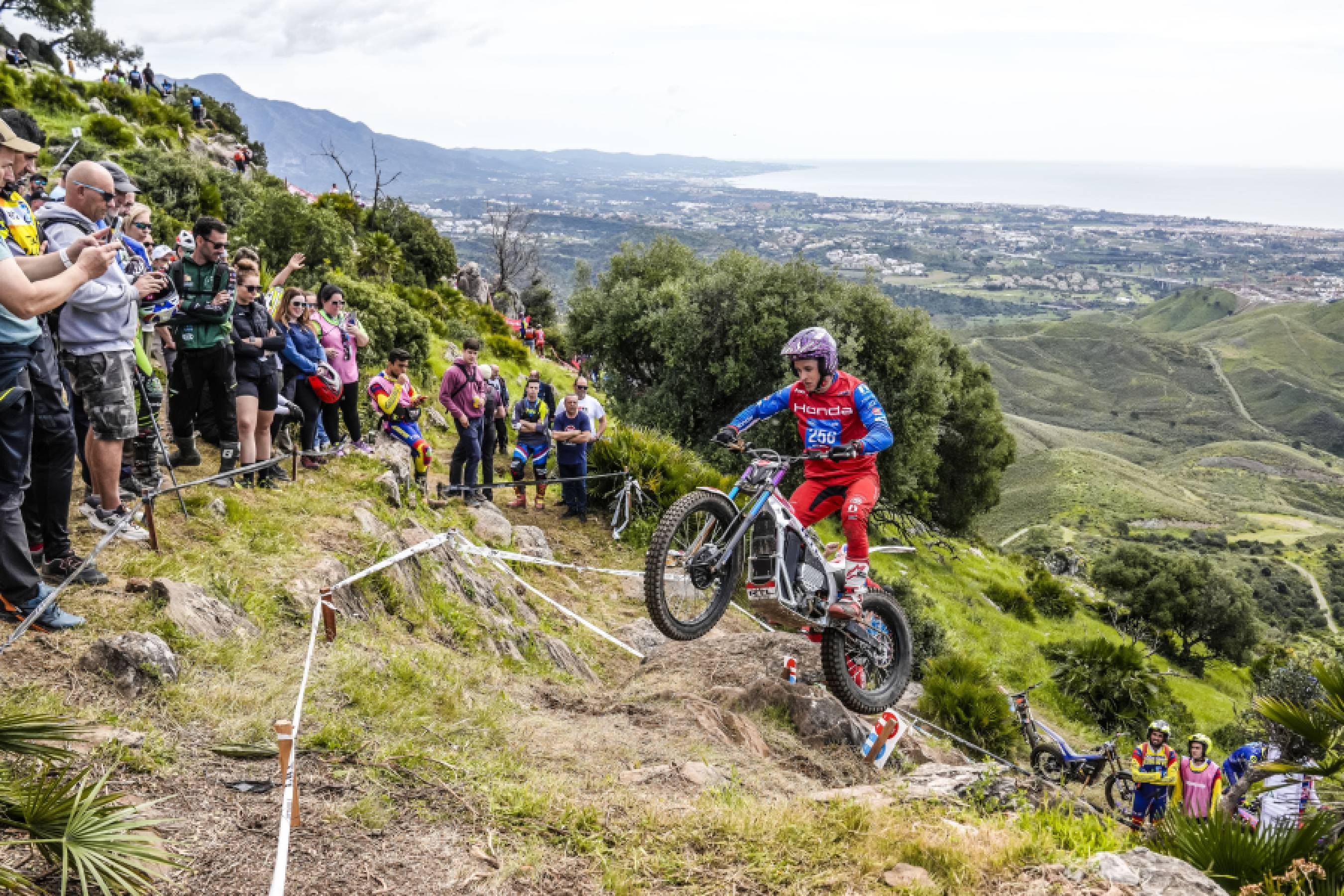
For the TrialGP Trial2 class season opener in Spain, Gelabert rode that RTL ELECTRIC that Fujinami rode to victory in three JTR rounds last year. This marked the RTL ELECTRIC’s first foray onto the world stage. Fans worldwide, the development team, and the rider were confident of victory. Saturday’s Race 1, however, ended in 16th place with zero points. While the team recovered to score points in Race 2, the results fell far short of expectations.
Akiyoshi: During testing and practice, it seemed to be performing well. In practice, we sometimes ran alongside engine-powered bikes, and there were even sections where it felt like only the EV could handle it. The entire team believed we could win, so finishing without points was completely unexpected.
Unexpected struggles. Was it rider unfamiliarity, or the unique challenges of the race?
Akiyoshi: I think the calm environment of practice versus the race was just different. The way he opened the throttle seemed different in practice compared to the race.
Fukao: That felt bad. But there was only one week between the opening round and Round 2. With travel time, we only had about one day, maybe a day and a half, to actually test the bike. We changed direction in that limited time, though. The bike was exactly the same, but we just made a major change to the direction of the mapping. Then, within the remaining short time, we had to get Gelabert to adapt his riding style.
The development team determined from debriefing that the cause of this poor performance wasn’t Gelabert, but the mapping controlling the motor. A major change in the direction of the mapping was needed in a short time, and Fujinami was the one to steer that change.
Fukao: Changing the direction of the mapping meant Gelabert had to abandon the settings he had painstakingly tuned to his liking. Honestly, Gelabert must have felt confusion and conflict. It was Fujinami who stood by Gelabert and persuaded him. Fujinami described it as a generous setup – a mapping where the bike would tolerate some rough handling to a certain extent. After all, the Trial2 class allows even less room for error than the GP class.
Akiyoshi: The race isn't decided by whether the rider can or cannot do something, but by how well they can ride without making mistakes. Gelabert’s setup was one where it was fast, but a small mistake could lead to a major crash. Fujinami explained this to Gelabert.
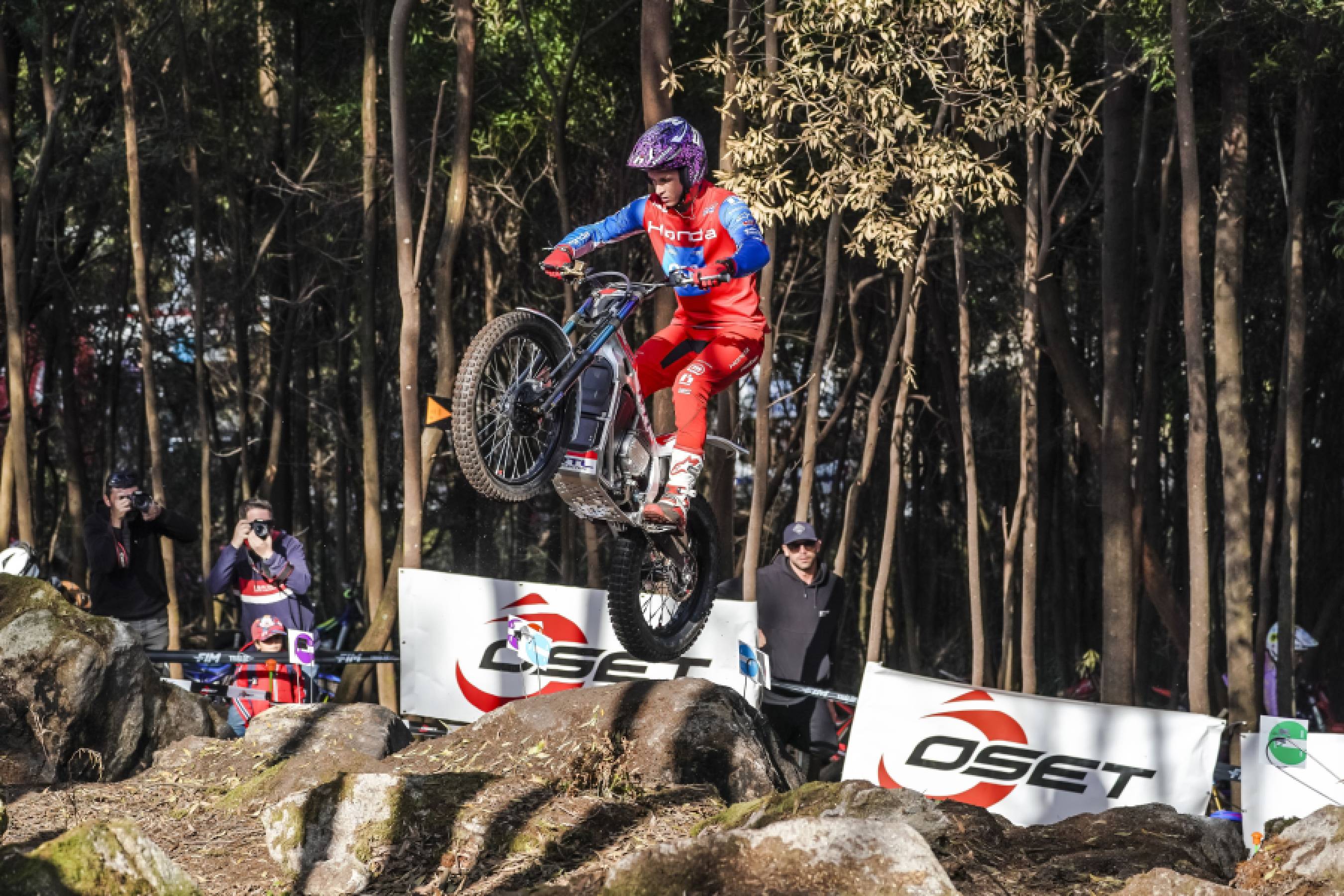
Every rider has their own convictions. If they cannot believe in themselves, they will hesitate when tackling difficult sections. Understanding and accepting such a major directional change from a peaky setup delivering sudden bursts of power to a solid setup prioritizing results would not be easy for a rider.
Fukao: Honestly, Gelabert seemed a bit unconvinced at first. But as he rode through various sections, he intuitively understood, just as Fujinami advised, that the new mapping offered a higher success rate. Gelabert’s original setup still worked sometimes. In fact, he’d ride brilliantly sometimes. But it lacked consistency. Switching to a more forgiving setup significantly increased his success rate.
As the setup changed, there were shifts in Gelabert’s riding as well as the bike.
Fukao: Once he started feeling the increased success rate from the setup change, he became much more open to listening to the engineers’ opinions. During the mapping process, we sometimes have completely opposite opinions, but he trusts us to make the final call.
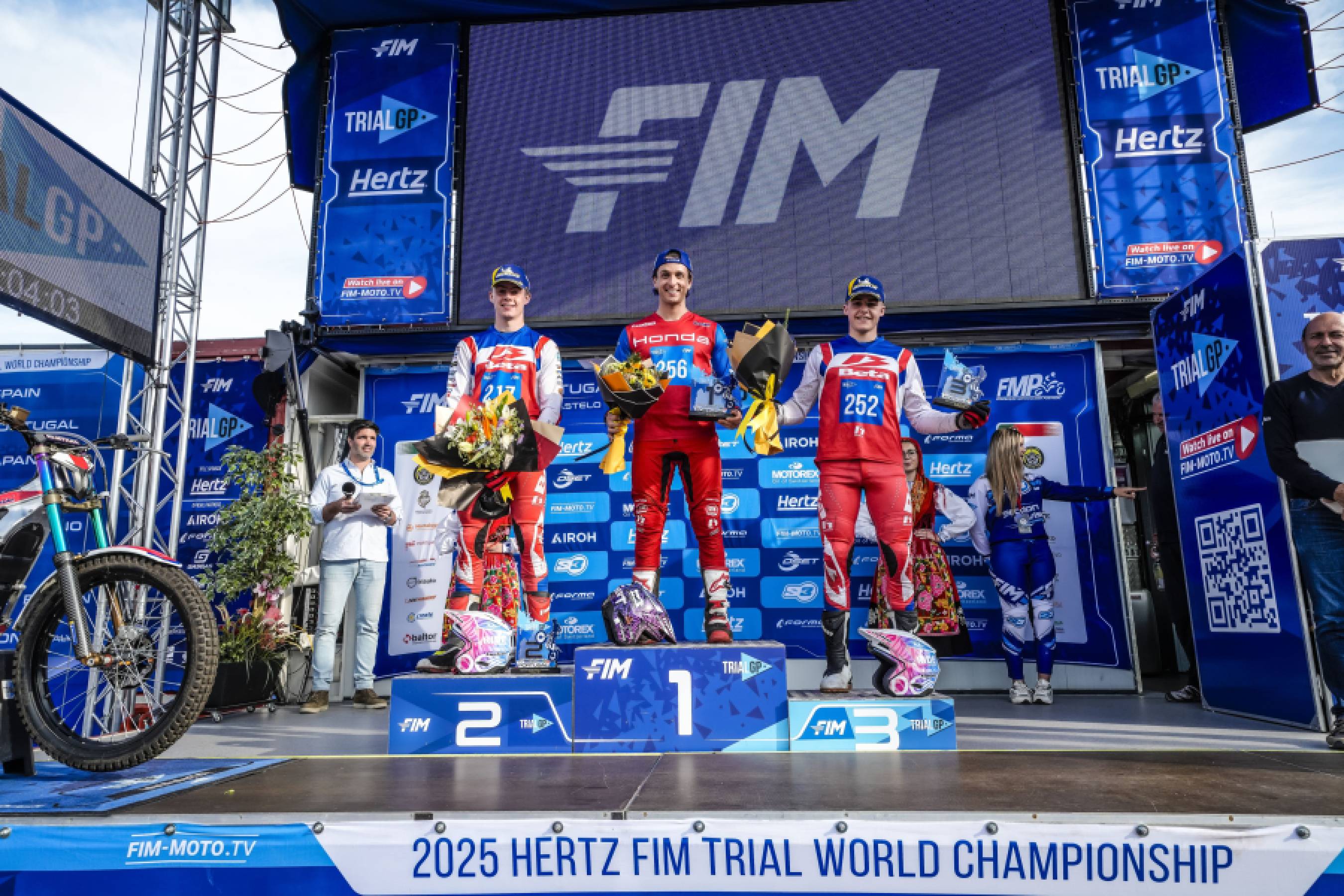
Akiyoshi: He completely overhauled his riding style in a very short time. That led to his victory in Round 2 in Portugal.
Mapping can theoretically be input into the bike as much as wanted. This means it should be possible to switch between optimal mappings for each terrain or section. Wouldn’t using them that way gain even better results?
Fukao: For a rider who can finely select maps according to the situation, that might be possible. Fujinami was more that type, instantly judging and switching while riding. In contrast, Gelabert is more the type to ride anywhere with one map. He inputs the bike’s behavior into his own body during practice runs and reproduces that in the race. So, to put it extremely, for Gelabert’s mapping, having just a dry-weather map and a wet-weather map would be sufficient.
An intriguing diagram, though the fine print was unreadable, resembled a grand flowchart.
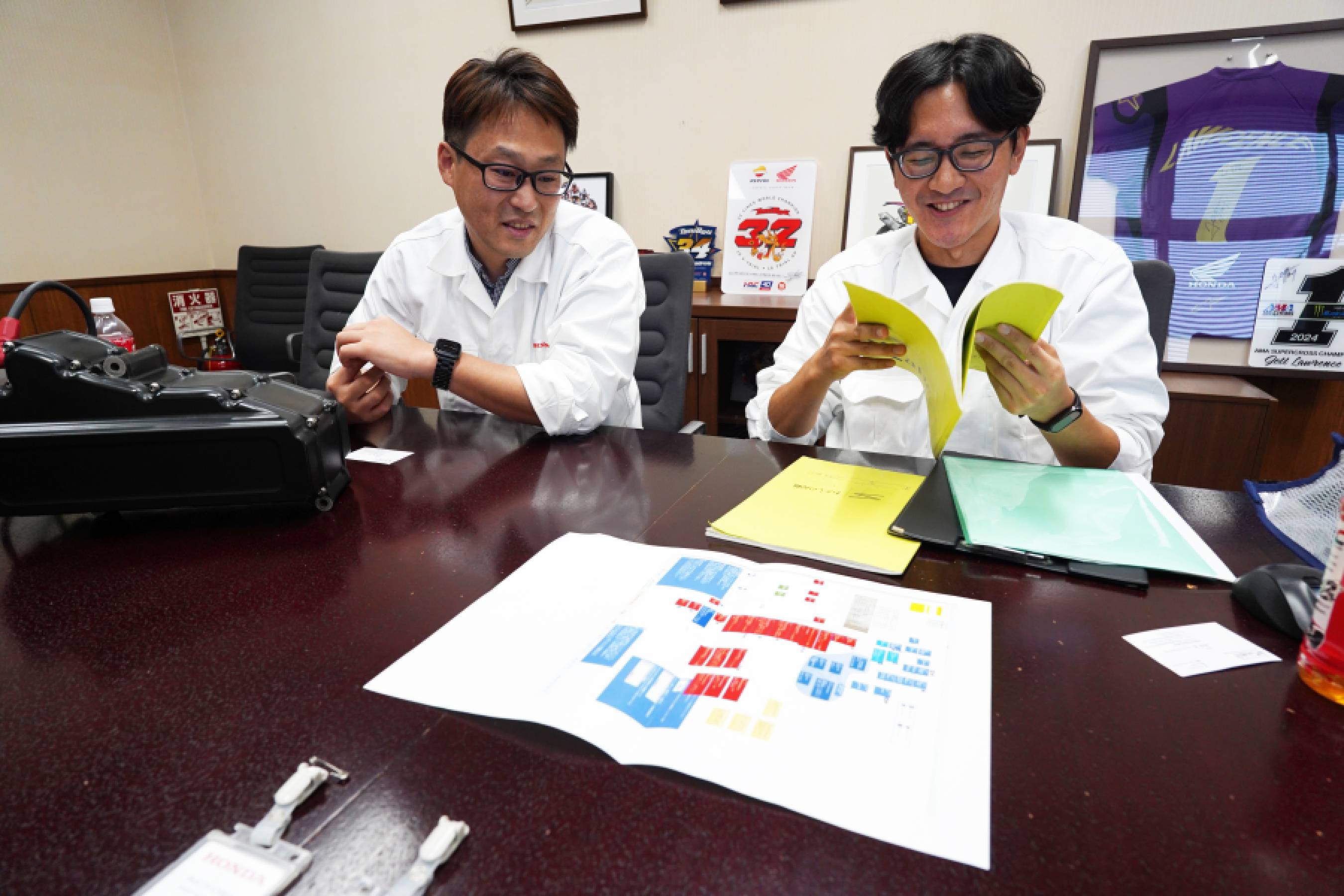
Fukao: This is the mapping family tree. It shows how we evolved from the very first map. Gelabert’s responsive maps are somewhere in here too. We created this family tree to share information within the development team, but it also serves to trace the origins of each map. During the mapping process, requests like reverting to yesterday’s mapping sometimes come up, and this is where the family tree proves useful.
Mapping is not just for specialists. Eventually, Gelabert became part of this group too.
Fukao: Sometimes, between runs, I’ll sketch the map’s characteristics in a notebook. We’ll all look at it together, including Gelabert, and discuss how to modify specific areas. Gelabert would add drawings and comments. The sketches can be very rough, but we’d sometimes use those images as references for mapping.
Akiyoshi: This kind of work is unique to EVs. Changes are reflected much faster than with engine-powered bikes. The work time is shorter too, so I think riders waiting for work to be done experience less stress. With an engine, it might be a matter of grinding the cam, but once you grind it, you can’t put it back. Gelabert was really impressed by this kind of work and tried all sorts of things. However, precisely because you can do so much, especially in the beginning, you tend to overdo it and things get confusing. This experience was refreshing for Gelabert, who said he’d only ever worked with carburetor bikes before.
Honda’s EV challenge in the world of trials, which began with three consecutive JTR victories, faced the harsh reality of unexpectedly scoring zero points in the Trial2 season opener. However, through the development team’s swift recovery, Fujinami’s persuasion, and Gelabert’s astonishing adaptability, the team succeeded in recovering and claiming victory in a short time.
The mapping resulted from adjustments unique to EVs, and the rider and EV bike adapting to each other. The Honda RTL ELECTRIC was not just a fast bike, but was establishing its presence globally as an EV bike built to conquer the trial world.
Yet, the long TrialGP season was far from smooth sailing. As riding time increased and the bike faced diverse terrain, unique design challenges specific to EV trial bikes emerged, and the team faced unexpected issues late in the season.
Part 2 delves into the barriers unique to EVs that were faced, and explores the future of EV trials envisioned by Honda.
【Related article】
Behind the Scenes of Honda RTL ELECTRIC Development: EV Trial Bike Takes On the World (Part 2)