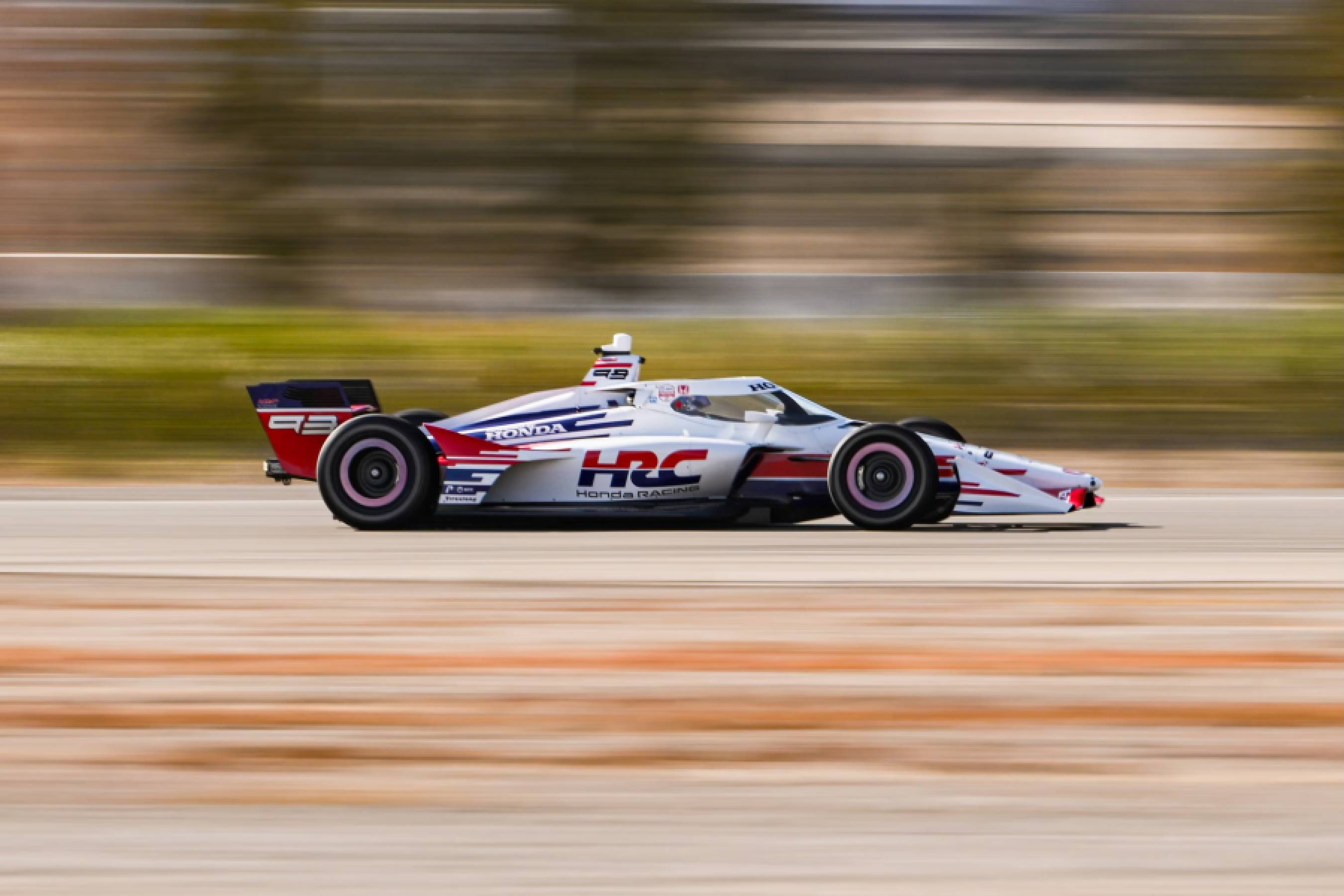
HI22TT Series
Honda’s engine for the 2026 IndyCar Series. Honda and Chevrolet again will compete for the IndyCar Manufacturers’ Championship.
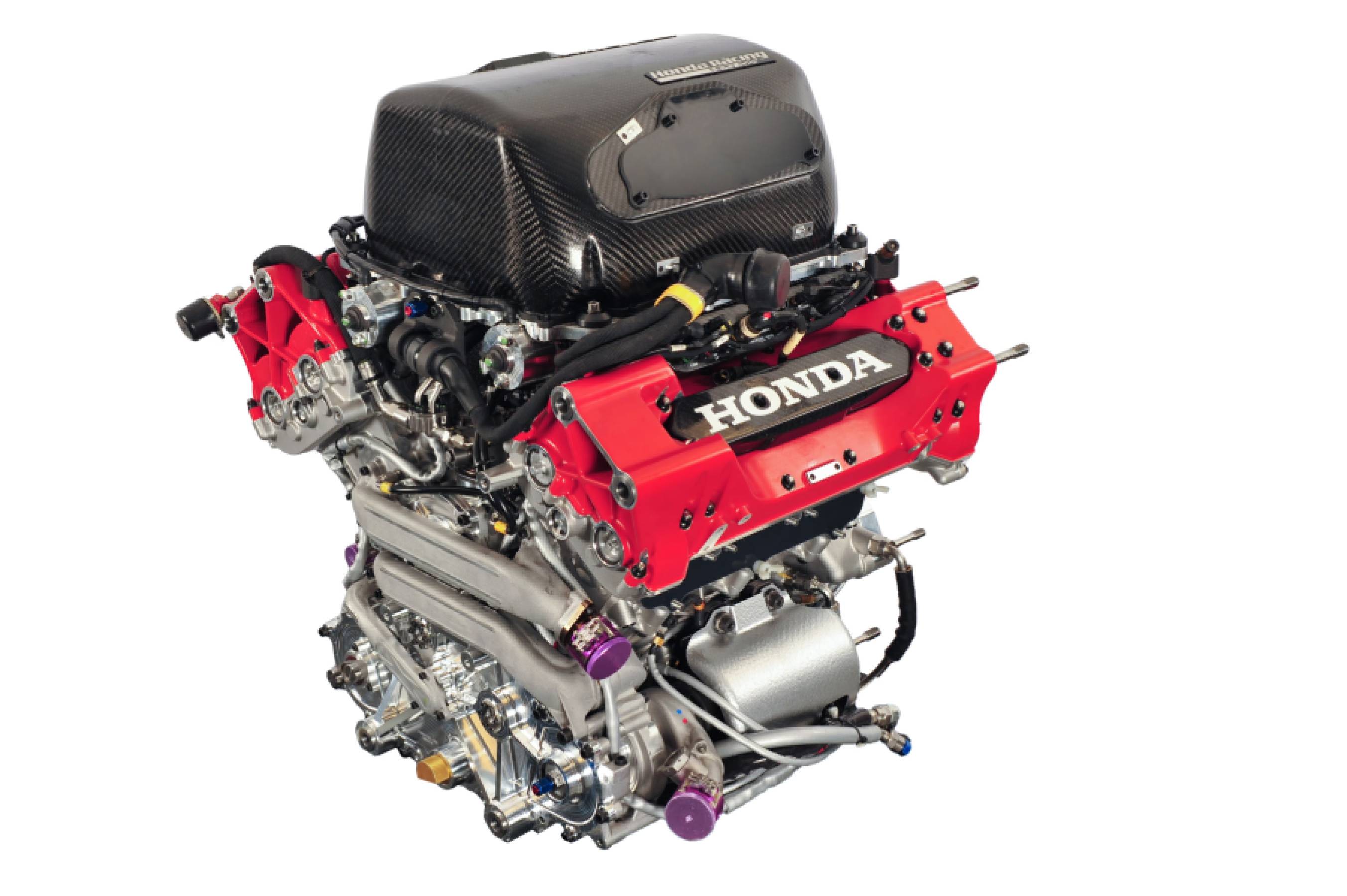
Honda Indy Twin Turbo v6 Engine
Honda’s HI22TT is a 2.2-liter, six-cylinder, twin-turbocharged engine. Cylinder bore is restricted to a maximum of 95mm, while stroke is free. Maximum engine revolutions per minute are a series-mandated 12,000 rpm.
Features of the engine include direct fuel injection, two Borg-Warner turbochargers, “Drive-by-Wire” throttle technology and a series-spec McLaren Electronics Engine Control Unit (ECU).
Engine Type | Twin turbocharged, fuel-injected, aluminium alloy V6 |
Displacement | 2.2L (134.25 cubic inches) |
Valvetrain | Dual overhead camshaft, four valves per cylinder |
Crankshaft | Alloy steel, four main bearing caps |
Pistons | Forged aluminium alloy |
Connecting Rods | Machined alloy steel |
Injection System | Electronic combined direct and indirect fuel injection |
Ignition System | Digital inductive |
Lubrication | Dry sump system, featuring multi-stage scavenge pumps |
Cooling | Single mechanical water pump feeding a single-sided cooling system |
Transmission | Six-speed sequential, paddle-operated, with a hand operated clutch |
Fuel | IndyCar Series mandated E85 race fuel |
Weight | Approximately 250lbs (112.5kg), series-mandated minimum weight |
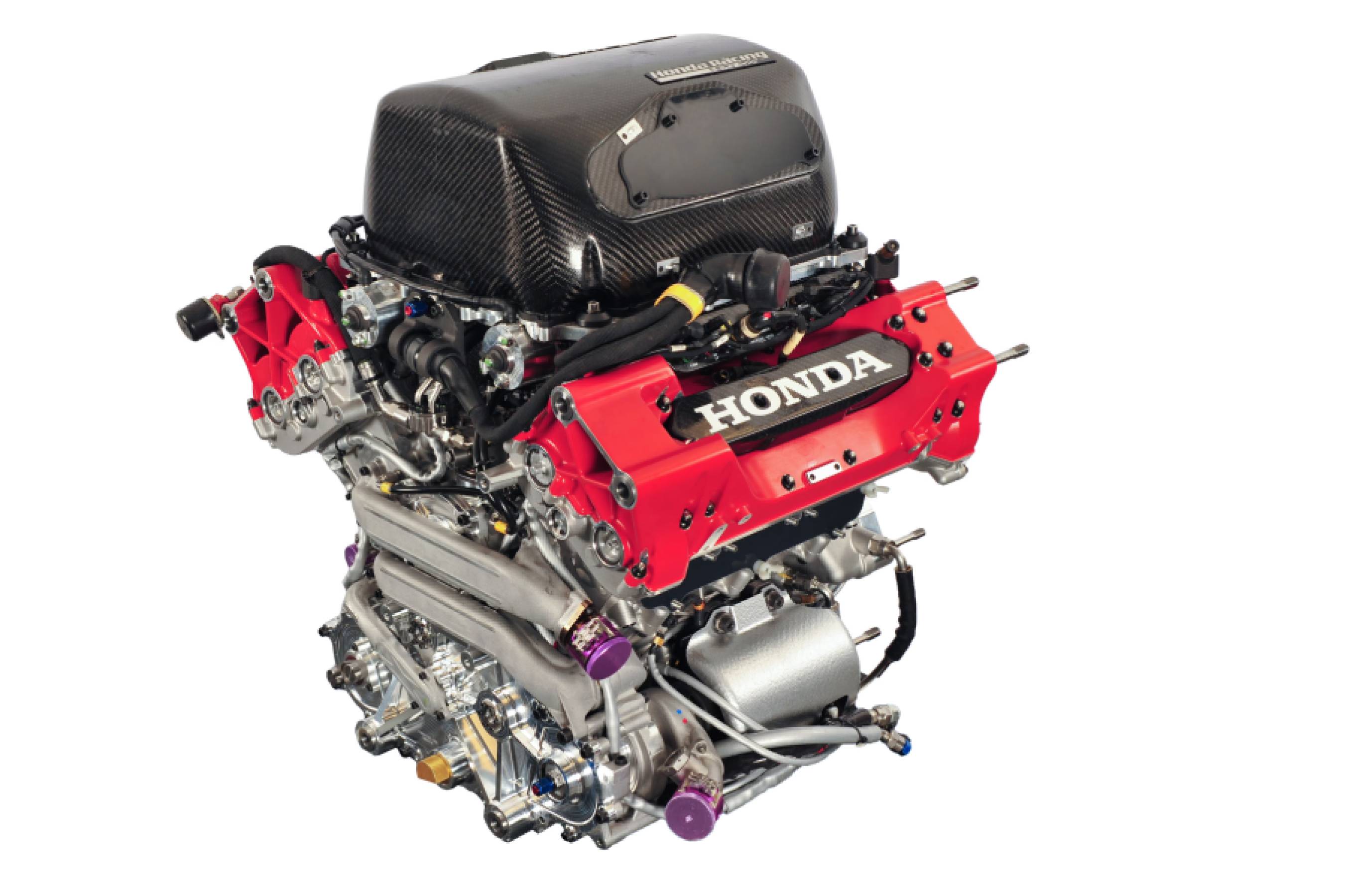
Hybrid Energy Recovery System
The IndyCar ERS Hybrid is combined with the existing 2.2-litre, twin-turbocharged V6 engine and produces up to an additional 60 horsepower. The hybrid unit is located within the bell housing area of the car, between the engine and transmission, allowing it to fit within the existing chassis and engine footprint.
Energy Storage System (ESS) | Produced by Honda Racing Corporation USA, the ESS is a series of 20 supercapacitors - designed by Skeleton - that store the energy harvested by the MGU until its deployment by the drivers. HRC US opted to use a supercapacitor rather than a battery because of its ability to both capture and deploy energy faster. The ESS can fully charge and deploy in approximately 4.5 seconds. |
EMPEL 180 | Produced by EMPEL in collaboration with Ilmor, the Motor Generator Unit, or MGU, captures spent energy produced under braking, turning it into electricity to be stored by the Energy Storage System. The MGU is also linked to the driveshaft of the existing Indy car engine - allowing the driver to deploy the harvested energy as additional power. |
DC / DC Converter | Produced by BrightLoop Converters, the DC / DC converter on the IndyCar ERS ensures that the energy from the ESS or generated by the MGU is output at the correct voltage for the existing powertrain, 12 volts. |
Voltage Control Device | Essentially an oversized fuse, the Voltage Control Device is a safety component that ensures the entirety of the system never exceeds 60 volts. |
Torque Output | The ERS generates 45 Newton-metres of torque |
Operating Voltage | The ESS has a maximum operating voltage of 60 volts and 2,000 amps |
Driver Control | The drive has control of the 'Stage of Charge' or SOC of the ERS, between 60 volts and 30 volts. Even if the driver 'empties' the ESS of charge, 30 volts will remain in order to restart the car in case of an off or stall. |
Charging | The ERS system can be charged from a 12 volt source. It can be charged in the shop or on pit lane easily, It can also be charged by the engine itself under idle. |
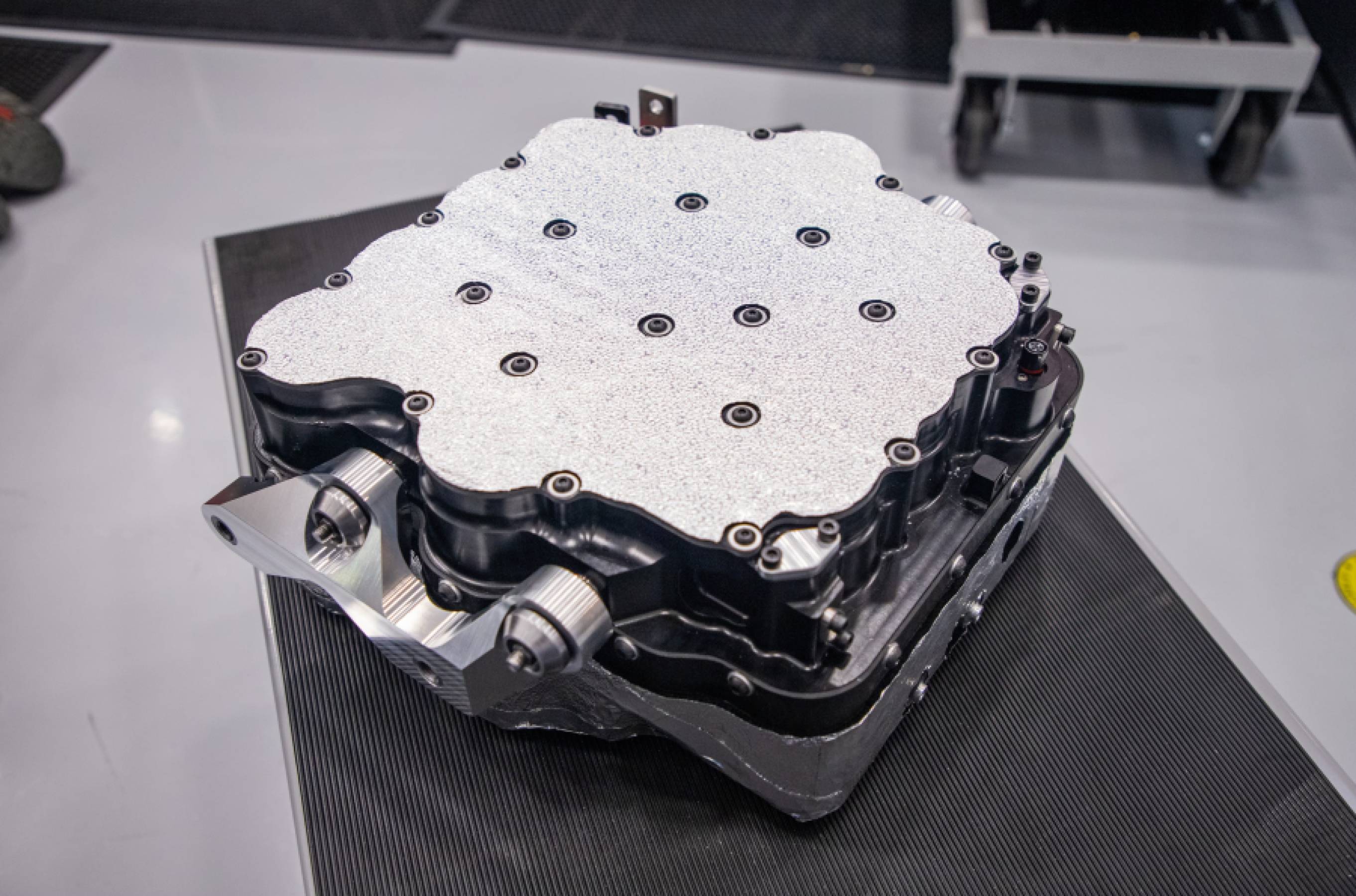
Honda IndyCar Chassis Specification
Design | IndyCar/Dallara Automobili, Italy |
Configurations | Street/Road Course Short Oval Super Speedway |
Components | Monocoque contains cockpit, fuel cell and front suspension; engine is stressed (integral) member of chassis; rear assembly contains bellhousing, gearbox and rear suspension members |
Materials | Carbon fibre, kevlar and other composites |
Chassis | Dallara IR-12 Chassis (2012-present) |
Suspension | Double wishbone with adjustable geometry, camber, toe, and ride heights, pushrods, rockers, third springs, driver adjustable anti-roll bars and weight jacker, multi-adjustable dampers with quick change coil springs |
Brakes | PFC ZR90 monobloc aluminium calipers, with PFC carbon brake discs and pads |
Weight | Approximately 1620lbs (Road/Street/Short Ovals) and 1590lbs (Speedways) (Does not include fuel / driver / drink bottle & contents / driver equivalency weight) |
Length | Approximately 201.7 inches |
Height | Approximately 40 inches |
Width | 75.5 inches minimum (Road/Street), 75.75 inches minimum (Ovals), 76.5 inches maximum (measured outside rim to rim) |
Wheelbase | Adjustable 117.5" to 121.5" |
Fuel | Sunoco E85 ethanol; Single, rupture-proof cell, 18.5 U.S. gallons (standard) |