I just wanted it to last forever
‘I've had so many moments through my career that have been important to me, but also big moments for Honda,’
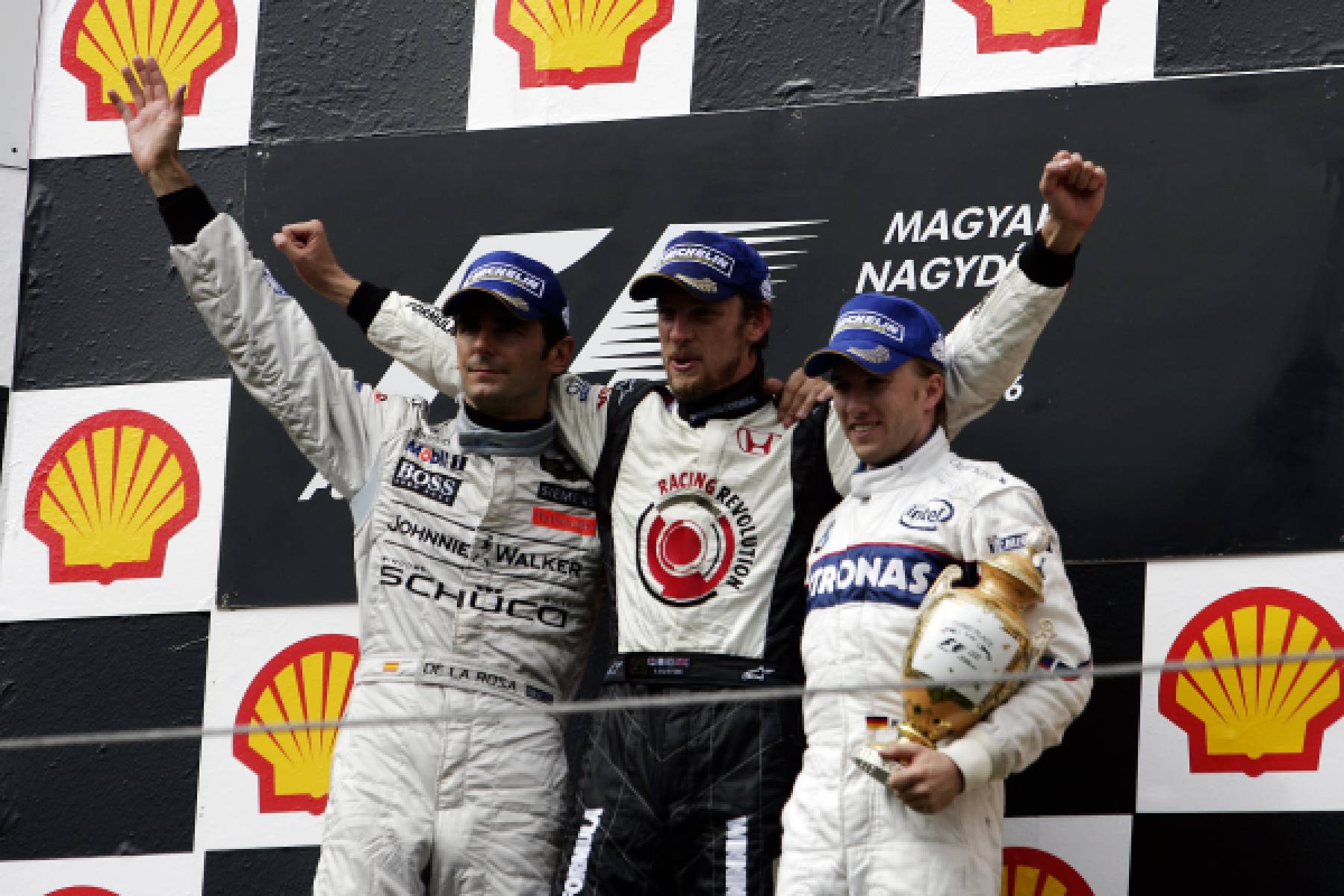
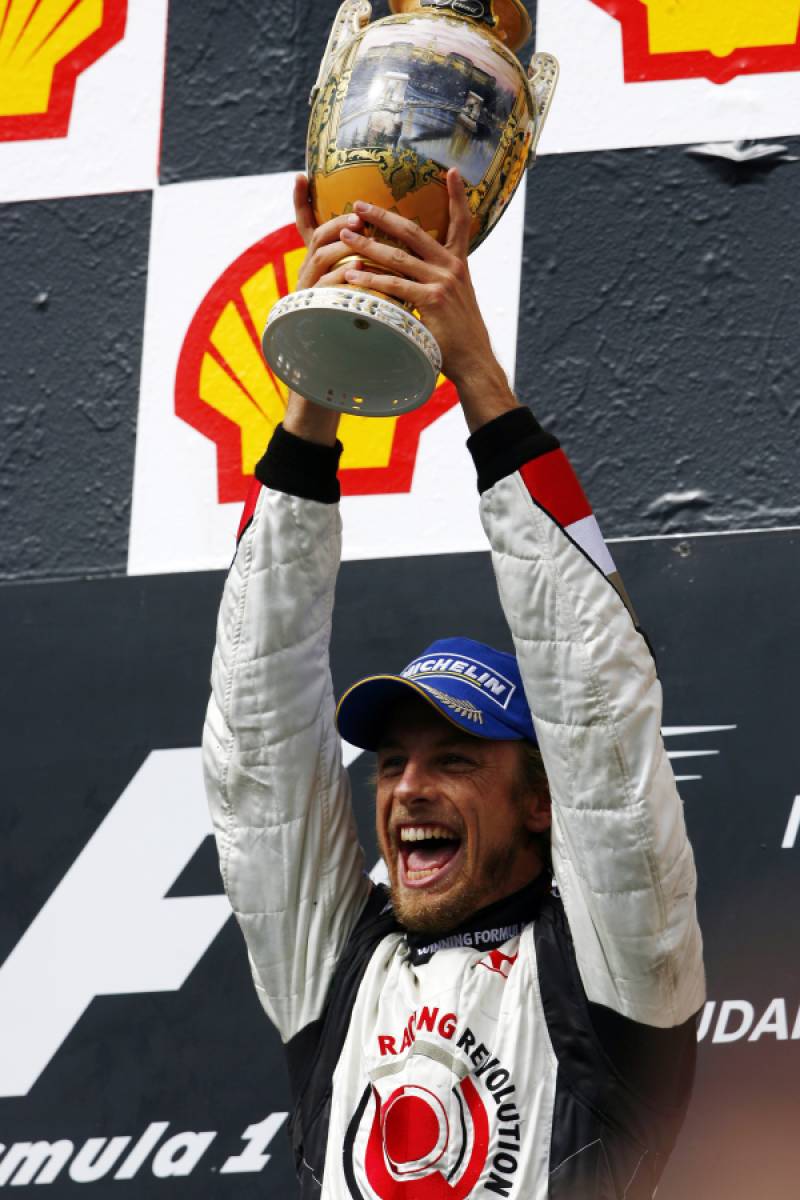
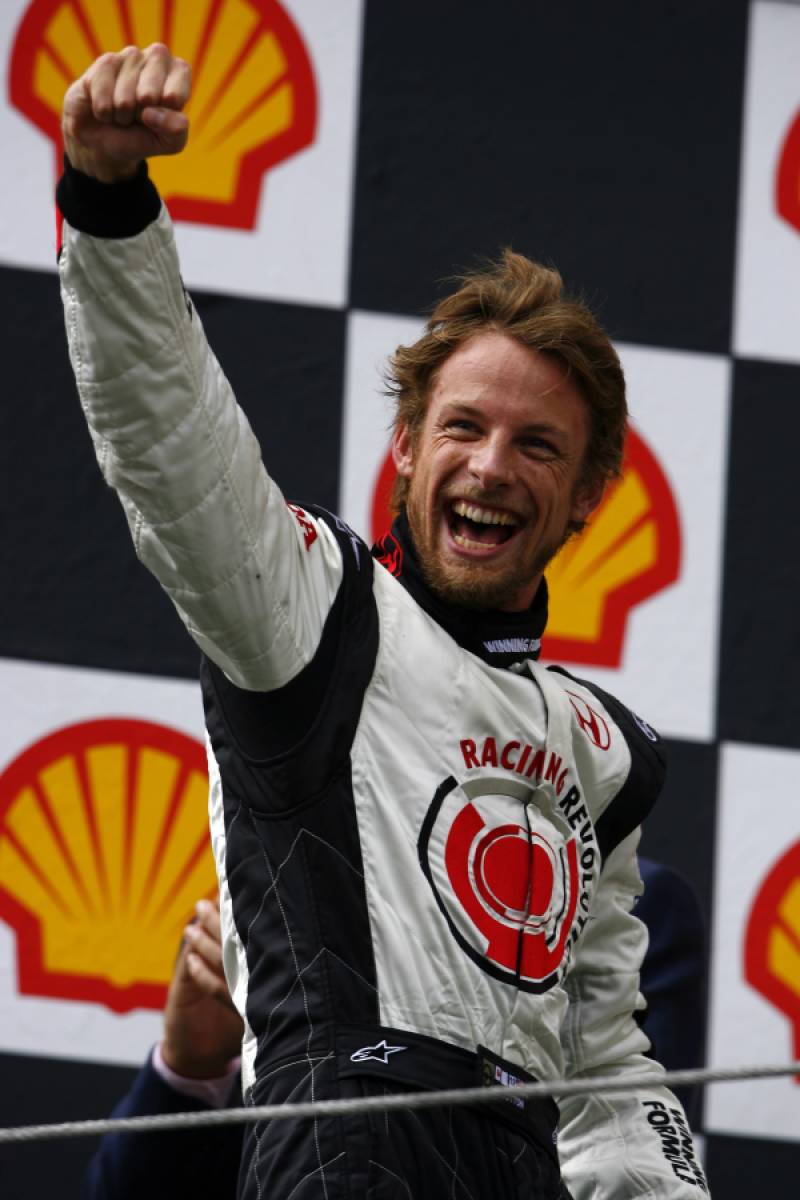
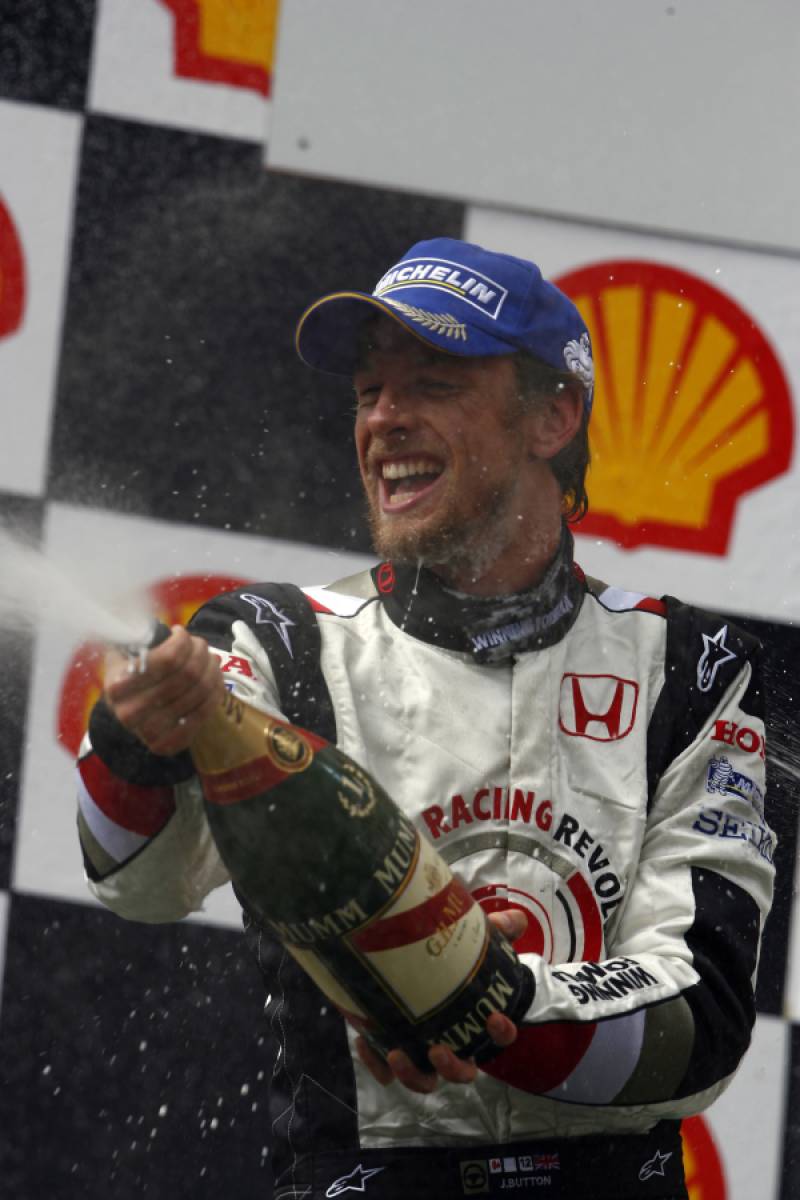
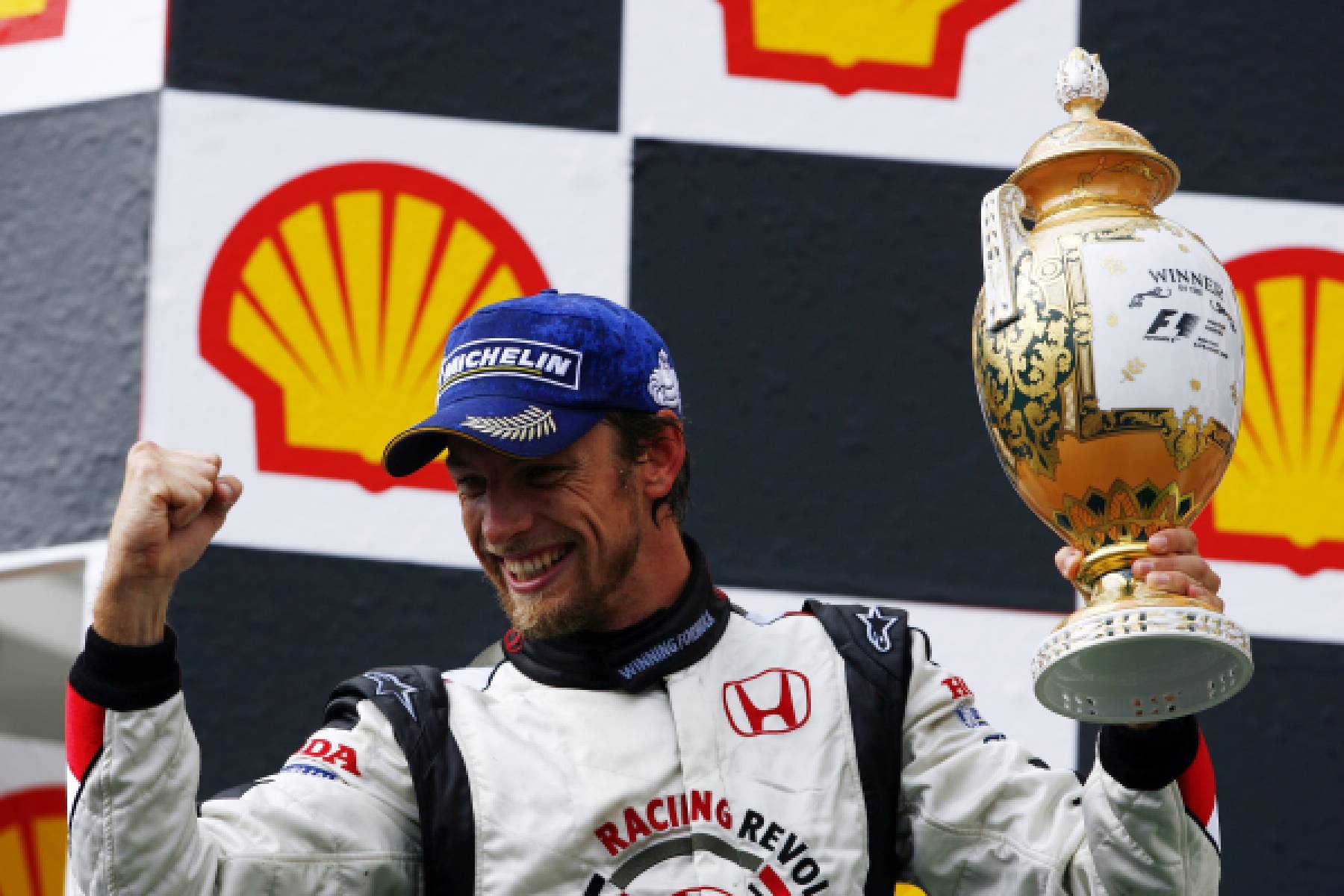
When the chequered flag waved on the 2006 Hungarian Grand Prix, then Honda Racing F1 Team driver Jenson Button achieved his childhood dream and etched his name into the history books as a Formula 1 Grand Prix winner. For Honda, his victory marked a welcome return to the top step of the podium as a works team. A milestone moment that rewarded the resilience, determination and perseverance of driver and manufacturer alike.
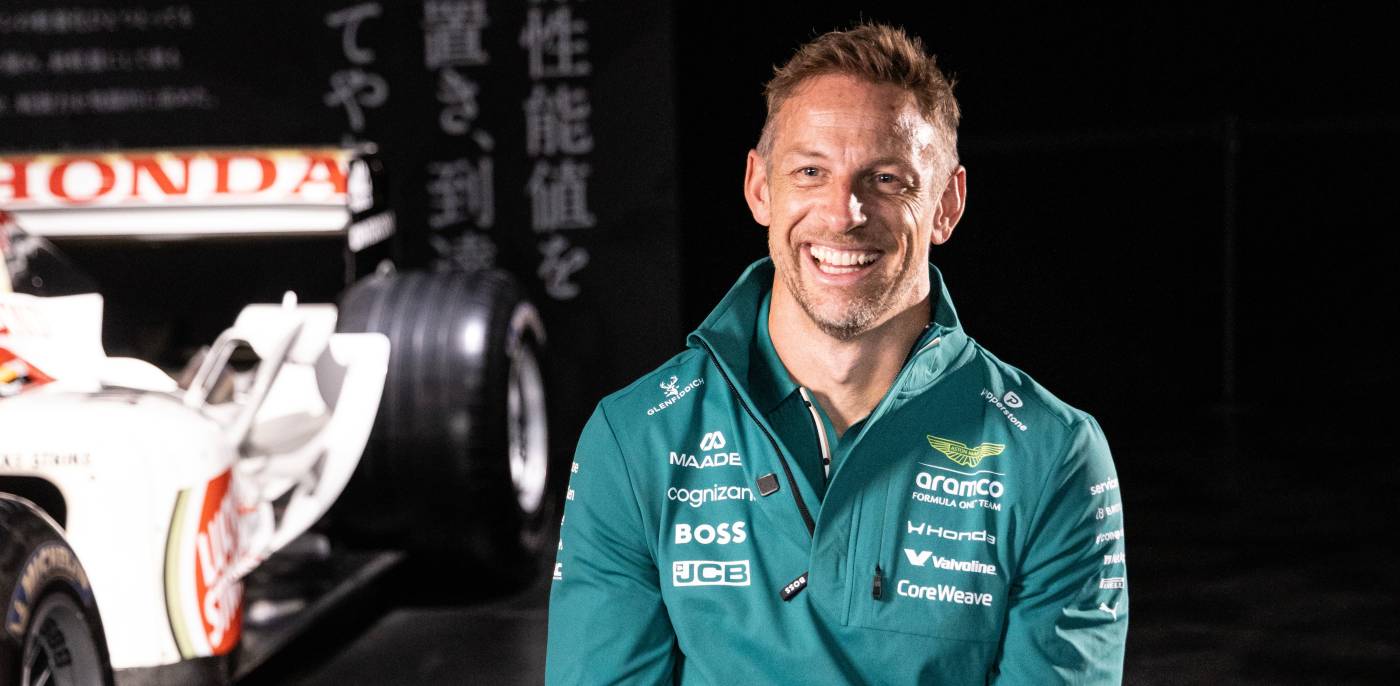
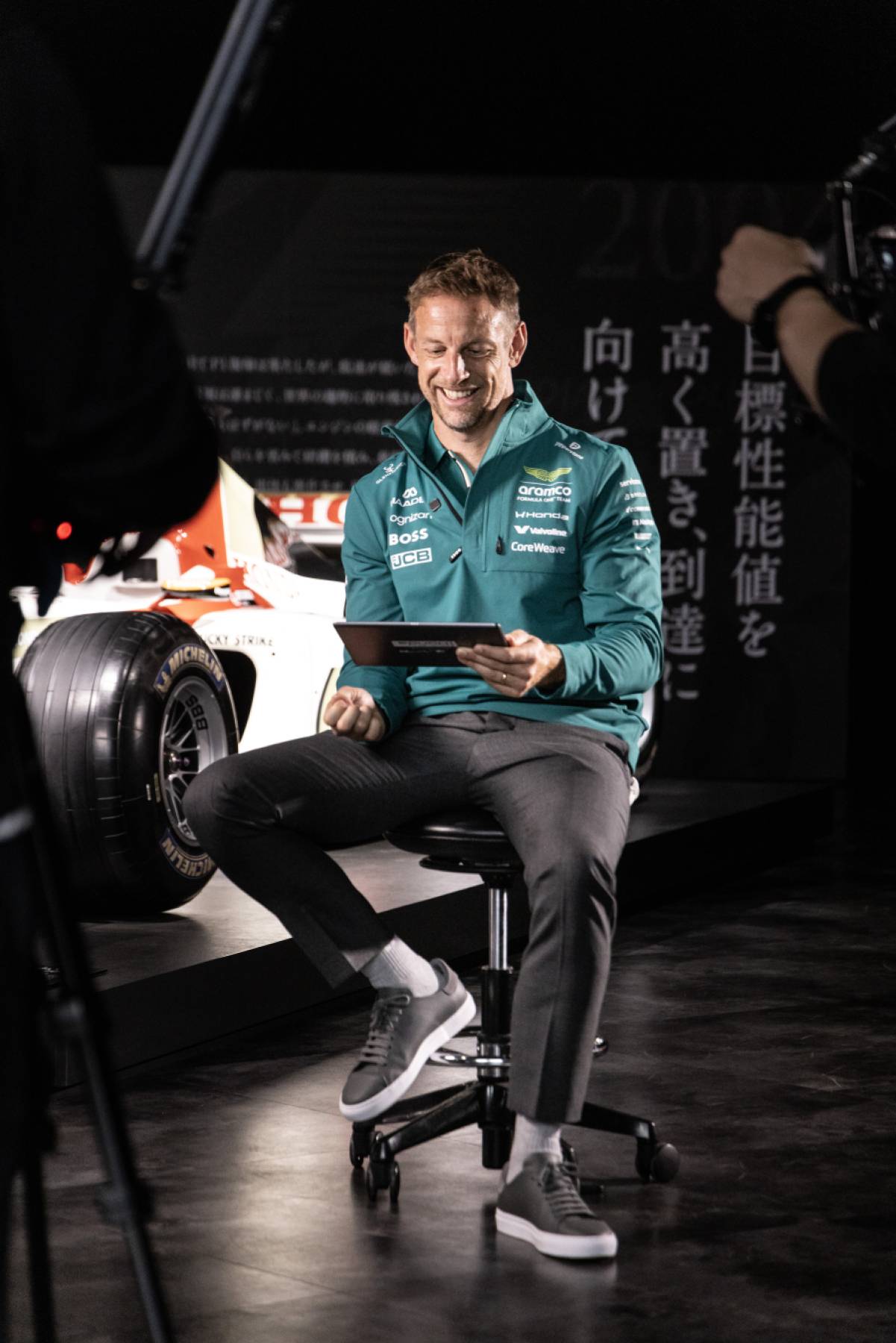
Some 20 years later, reunited with Honda once more via his role as Aston Martin Aramco Formula One™ Team Ambassador, Button sits in the Honda Racing Gallery in Suzuka and reflects on that moment. It is instantly clear that the significance of that first victory and the emotions that followed have cemented a lasting connection between the British driver and the Japanese marque. ‘I've had so many moments through my career that have been important to me, but also big moments for Honda,’ Jenson opens, before adding, ‘So that connection to Honda and the Japanese people was big. And I still feel that now.’
Connections, of course, are formed not just in moments of celebration and triumph but also in periods of adversity and failure. And for any driver or manufacturer chasing victory in Formula 1, the journey to that top step is fraught with challenge.
In 112 previous attempts, for one reason or another, the win had proved elusive for Button. He had come close previously, remarkably close in fact. In the Honda powered BAR 006 in 2004, in what was arguably a breakthrough season for Button, come season’s end his previously bare F1 trophy cabinet brimmed at the seams after 10 podium appearances. Further silverware was collected in what was a challenging 2005 season, but ultimately, a win seemed almost out of reach. Even Button began to doubt if it would ever happen.
So as the paddock bristled into life preparing for round thirteen of the 2006 season at the Hungaroring near Budapest, there was little to suggest that one of the most memorable races in Formula 1 was about to unfold. Looking back now, Jenson admits, ‘I always loved that track, it was tight, it was twisty, it was like Monaco without the walls.’
Often likened to a karting circuit, Hungaroring is indeed relentlessly twisty and challenges driver and machine equally. At the wheel, drivers relish the difficulty of stringing together a lap that demands rhythm and precision. Whilst mechanically the circuit rewards a balanced chassis and downforce. Button affirms, ‘We had a good car that weekend.’
Although clearly a fan of the circuit and confident in his race car, the weekend didn't provide any early signs that success was imminent for Button. A technical problem during Friday practice meant that despite the Honda RA106 proving to be a competitive package, Honda locked out the second row in qualifying, a 10-place grid penalty meant he would have to start the race from deep in the midfield in 14th. Button wasn’t alone however as the recipient of a grid penalty that weekend. Both Michael Schumacher and Fernando Alonso, the championship favourites at the time, received penalties for separate flag infringements in practice. They would line up in 11th and 15th respectively, indicating that an unpredictable race was likely to unfold.
Adding to the unpredictability, in the hours prior to lights out, heavy rain fell across the circuit, soaking the track. And despite the rain abating as the field assembled on the grid, the track remained wet throughout. A drying line was expected to appear quickly as the race got underway, but with further rainfall on the horizon and no wet running conducted by any of the field, it was going to be a race into the unknown.
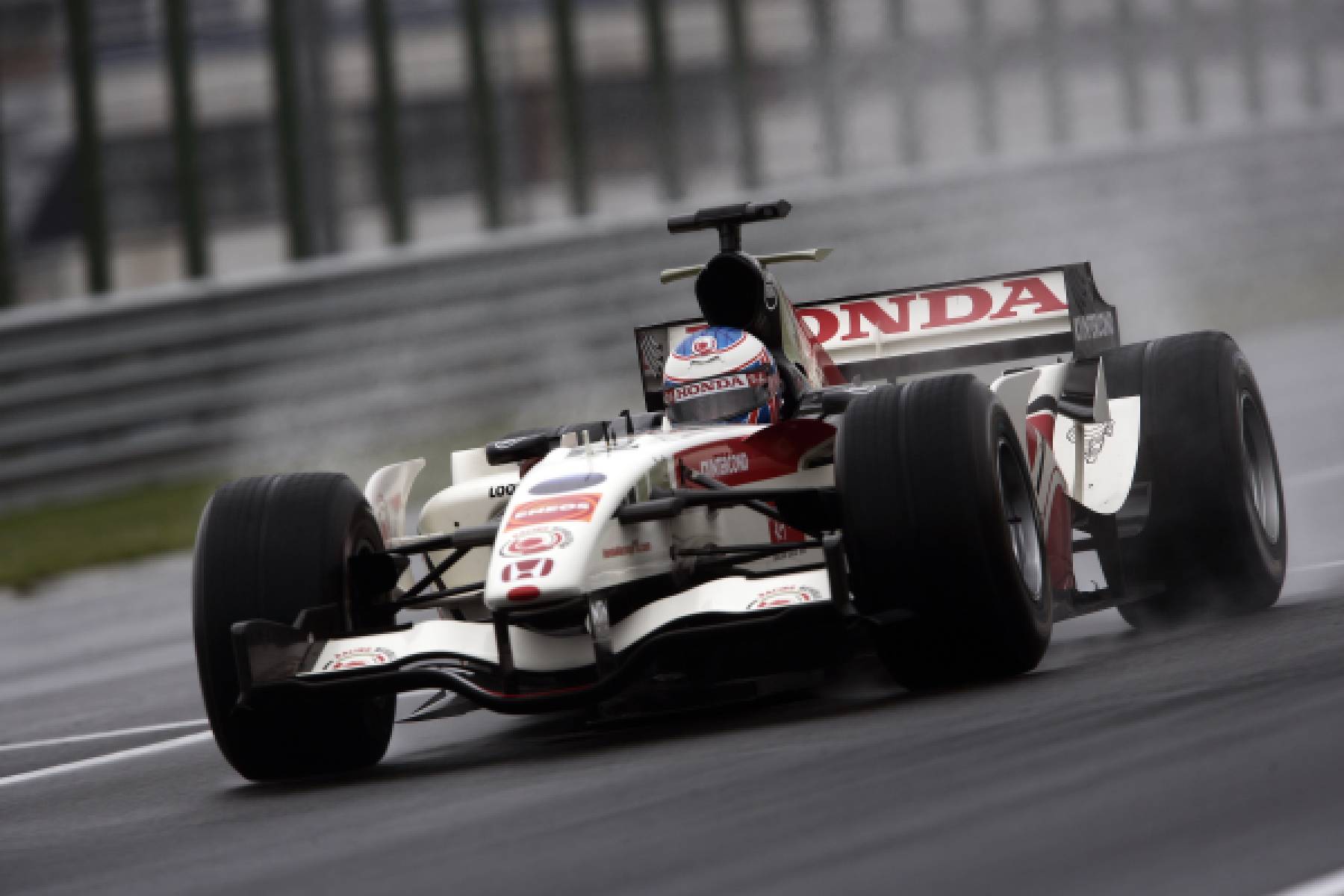
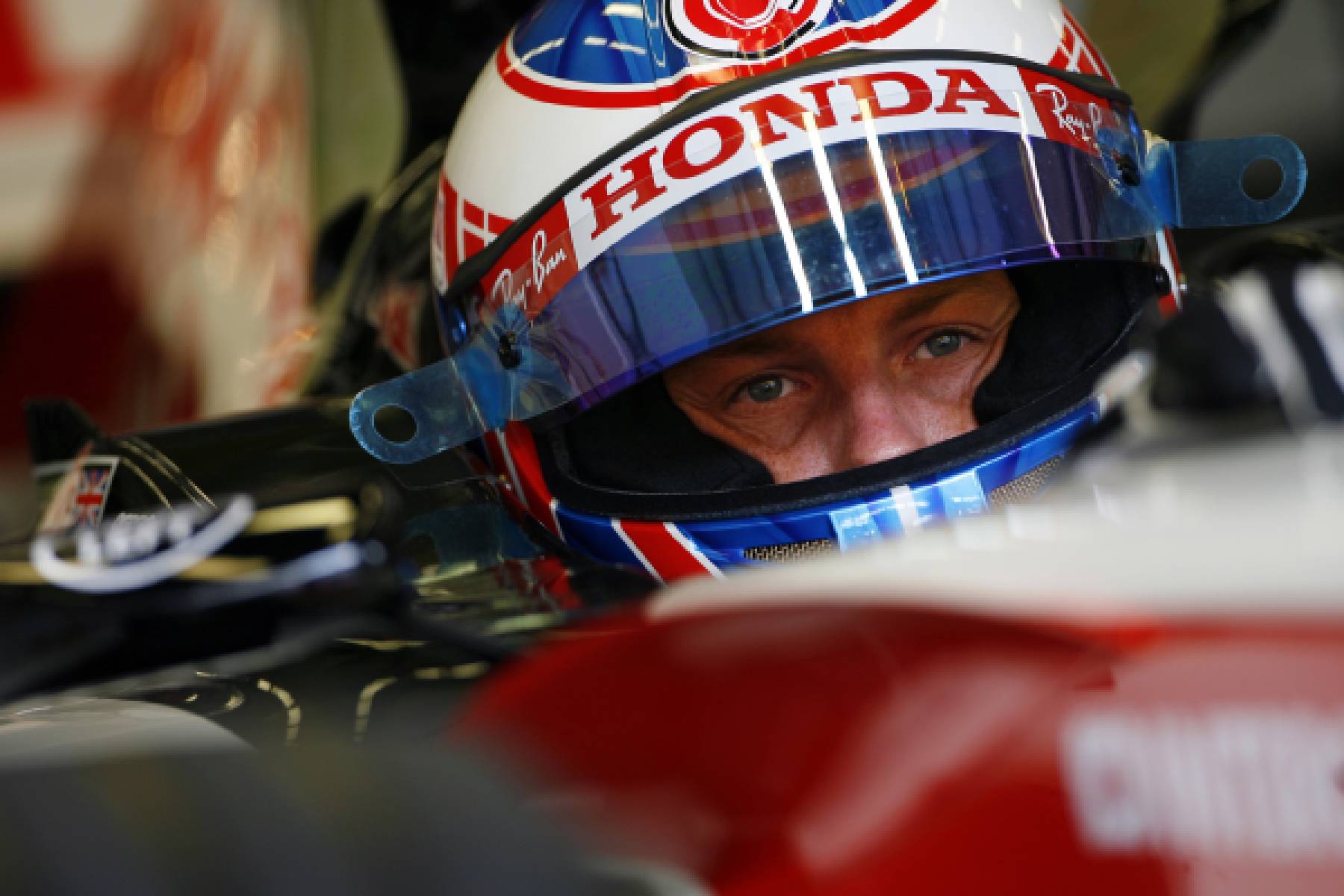
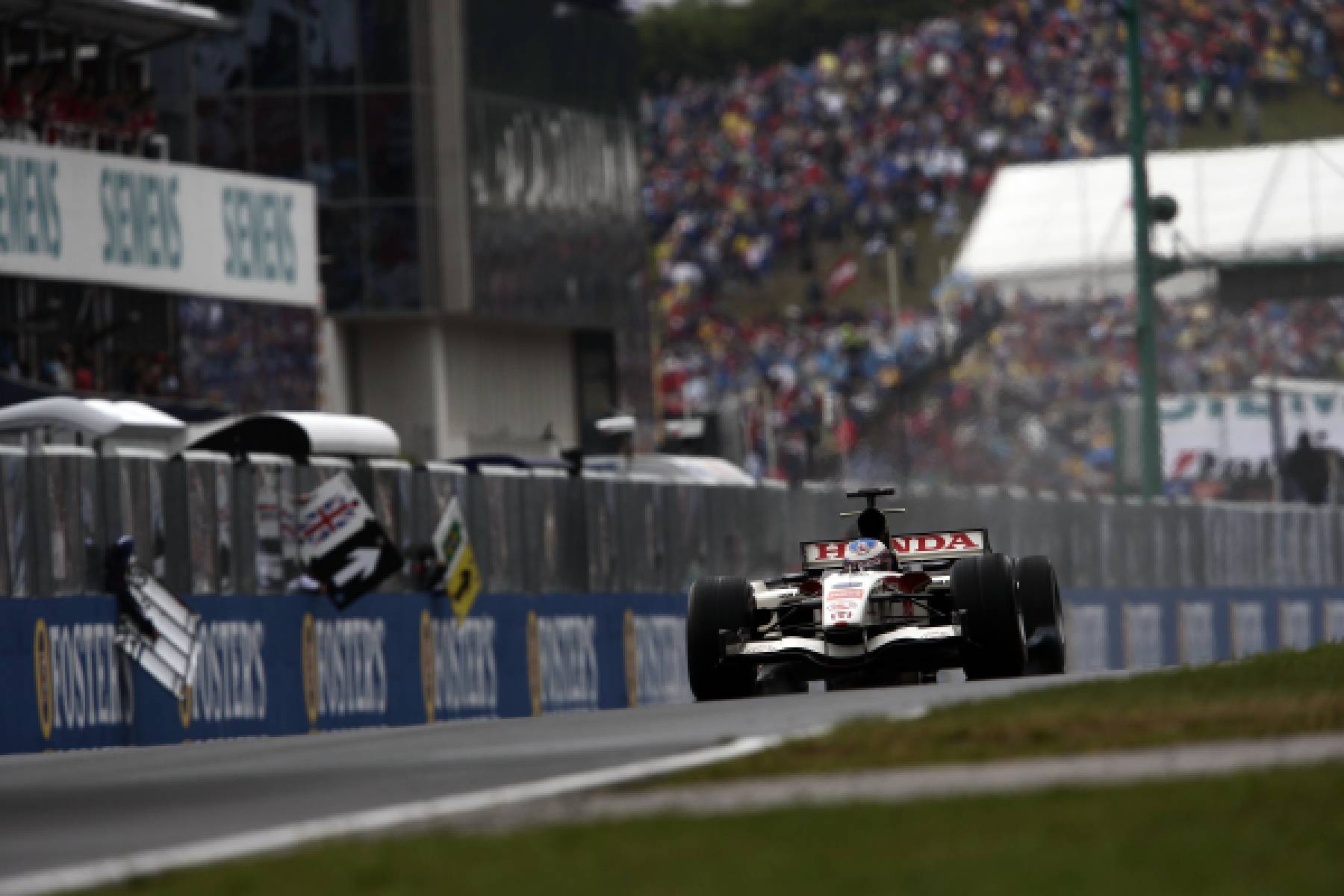
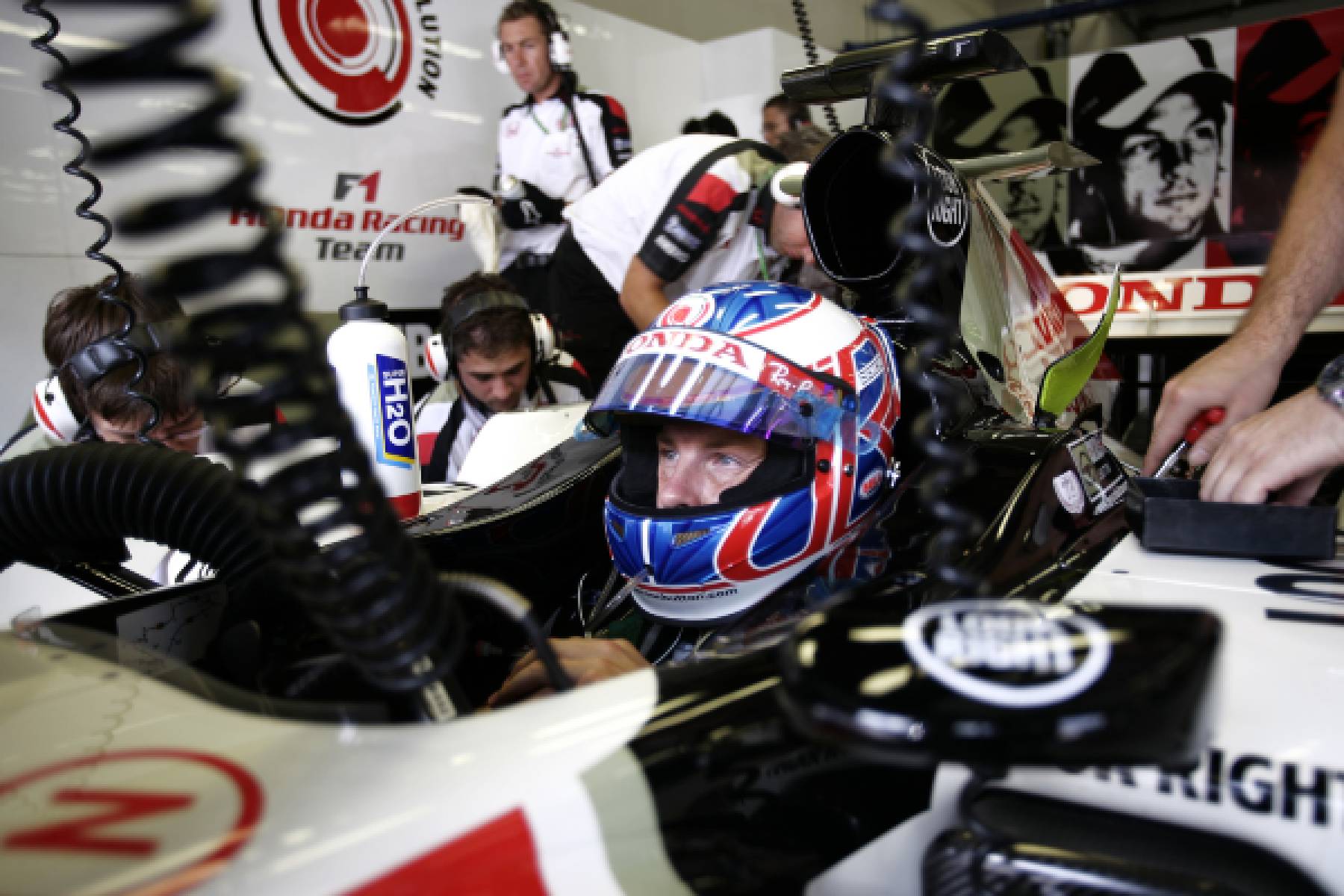
With the beauty of hindsight, and looking back through a Formula 1 record that includes the 2009 World Championship, 15 Grand Prix victories and 50 podiums from 306 Grand Prix, it is clear now that these conditions were the exact conditions in which Button excels. He is, arguably, one of the very best at driving in wet and changeable conditions thanks to his innate car control, cerebral tyre management and peerless ability to read changing track conditions. All of which were on full display in Hungary in 2006.
From 14th on the grid, in just four laps, Button had climbed up the order to run seventh. By lap seven, he was in fourth. And by the time of his first pit stop, he was locked into the podium fight. In the challenging conditions, keeping a cool head was just as critical on the pit wall as it was from within the cockpit. A bold decision not to pit during a safety car period mid-race enabled Button to gain track position on his rivals and hold second on the road behind Alonso out front.
With one-third distance remaining, Button pitted for his second stop of the race to refuel. Opting not to change tyres at all and remain on the same used set of wets, he rejoined the race track, hunting down Alonso for the lead of the race.
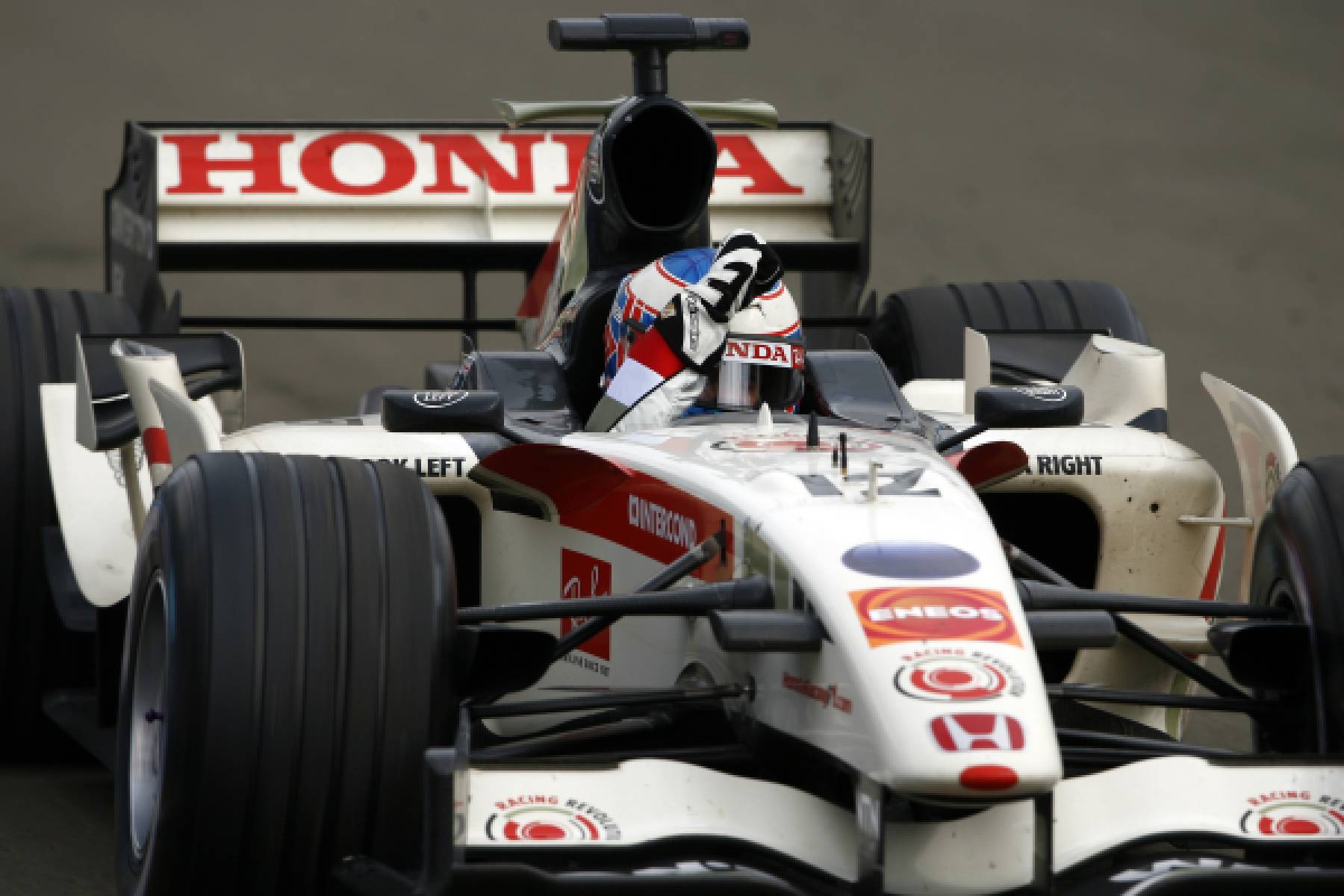
Under pressure from Button behind and with a drying line emerging, Alonso pitted on lap 51 to make the switch to dry tyres. However, a problem during his stop meant that he returned to the circuit with a loose wheel, which would ultimately cause his retirement from the race. Inheriting the lead with 19 laps remaining, Button now commanded a 20-second advantage over his nearest competitor, thanks primarily to the rapid pace with which he was lapping. Leading the race and with a genuine chance of victory, Button recalls the moment and how his experience differed from his peers ‘You know people say that when you're leading your first race, it feels like forever. You hear every issue. For me, it was awesome. I just wanted it to last forever.’ He continues ‘That moment, knowing you're leading, you're going to win your first race. It was very special.’
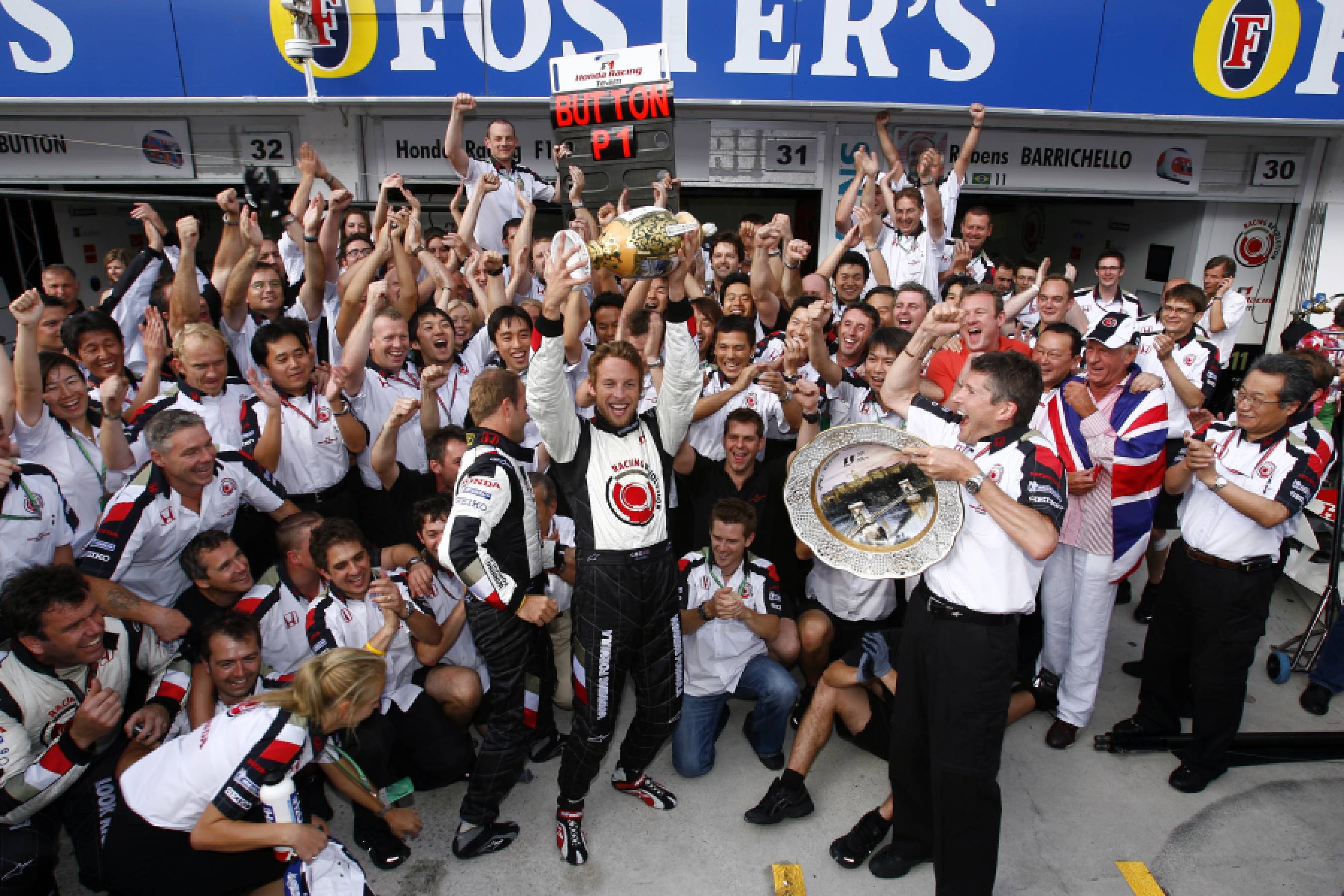
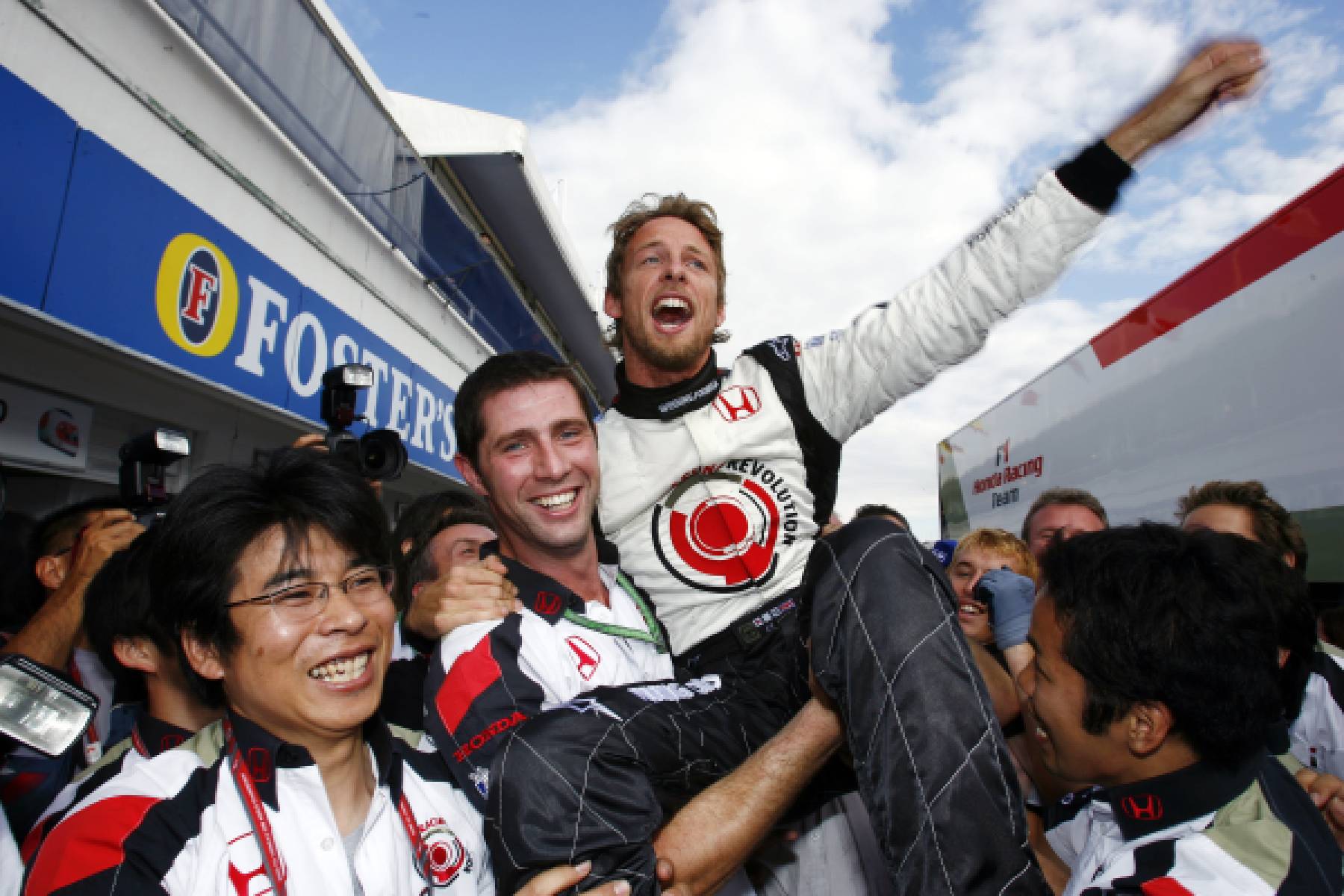
Special indeed. As his radio erupted in jubilant whoops and cheers, in the pit lane, the garage, and back at the factory, Honda celebrated its first race victory as a manufacturer in almost four decades. In the post-race press conference, Jenson declared to the world in a somewhat post-celebratory raspy tone, ‘Wow, what a day, it has been amazing! The weather conditions have made the race very difficult for everyone, but coming through from 14th and winning the race, I couldn't have done it in a better way I don't think.’
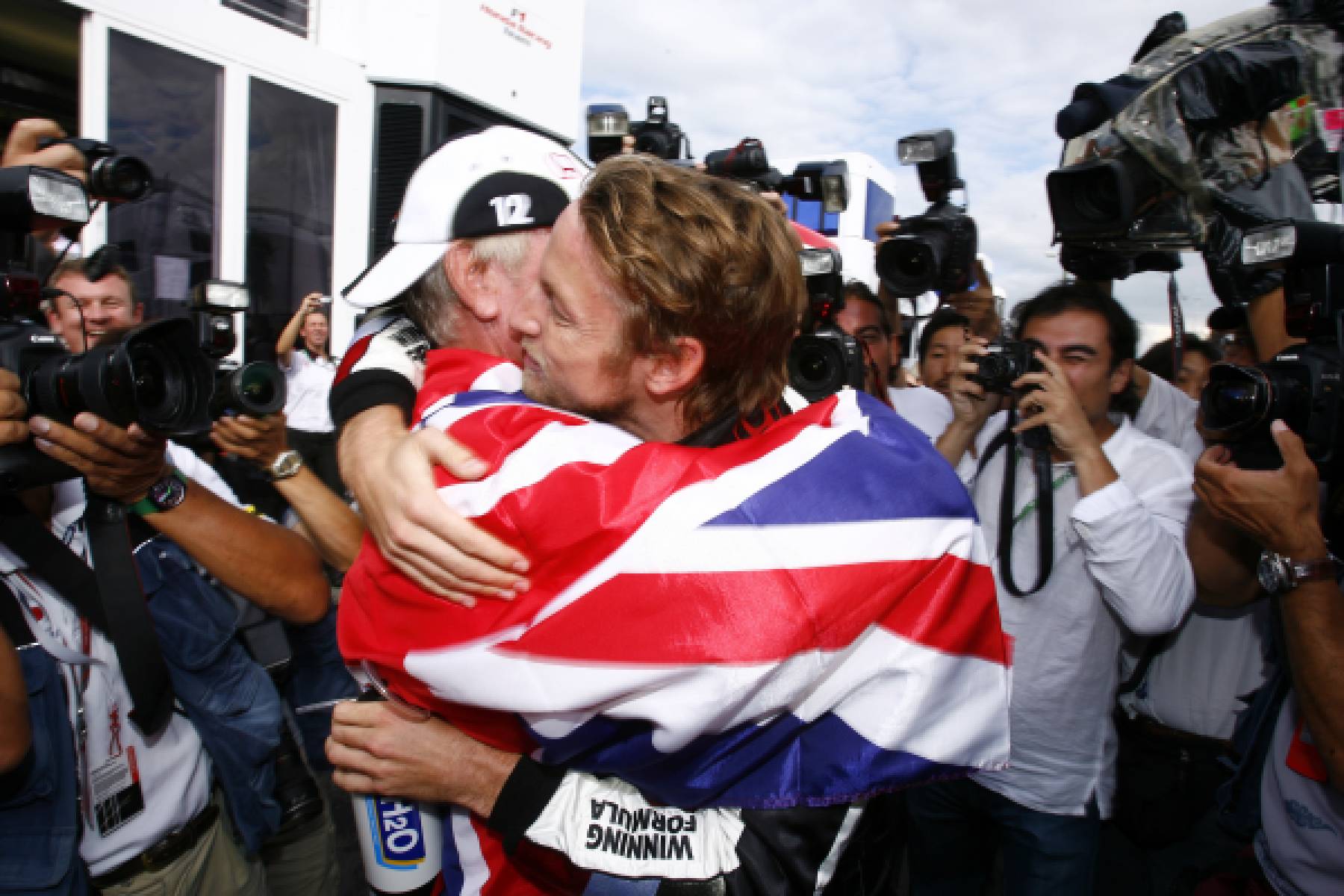
Commenting now, he provides even more clarity on the significance of that achievement, ‘The way the Japanese are when it comes to work ethic is extraordinary. They will work 24-7 to resolve an issue, however big or small that issue is. And what you end up having is performance, but also so much emotion, because they put their life into performing and getting the best out of themselves and the best out of the team they're working with. So the emotion is pretty raw at the end of it. When I crossed the line in Hungary for our first win together, I've never seen so many grown men cry. It was such an emotional moment.’
Twenty years on, this victory, Honda’s 72nd in Formula 1, remains a powerful reminder of what can be achieved through teamwork, perseverance and the courage to embrace difficult challenges.